Category: Insight

  • Your Ads Aren’t Failing Because of Creative. They’re Failing Because Nobody Trusts You Yet.

    Your Ads Aren’t Failing Because of Creative. They’re Failing Because Nobody Trusts You Yet.

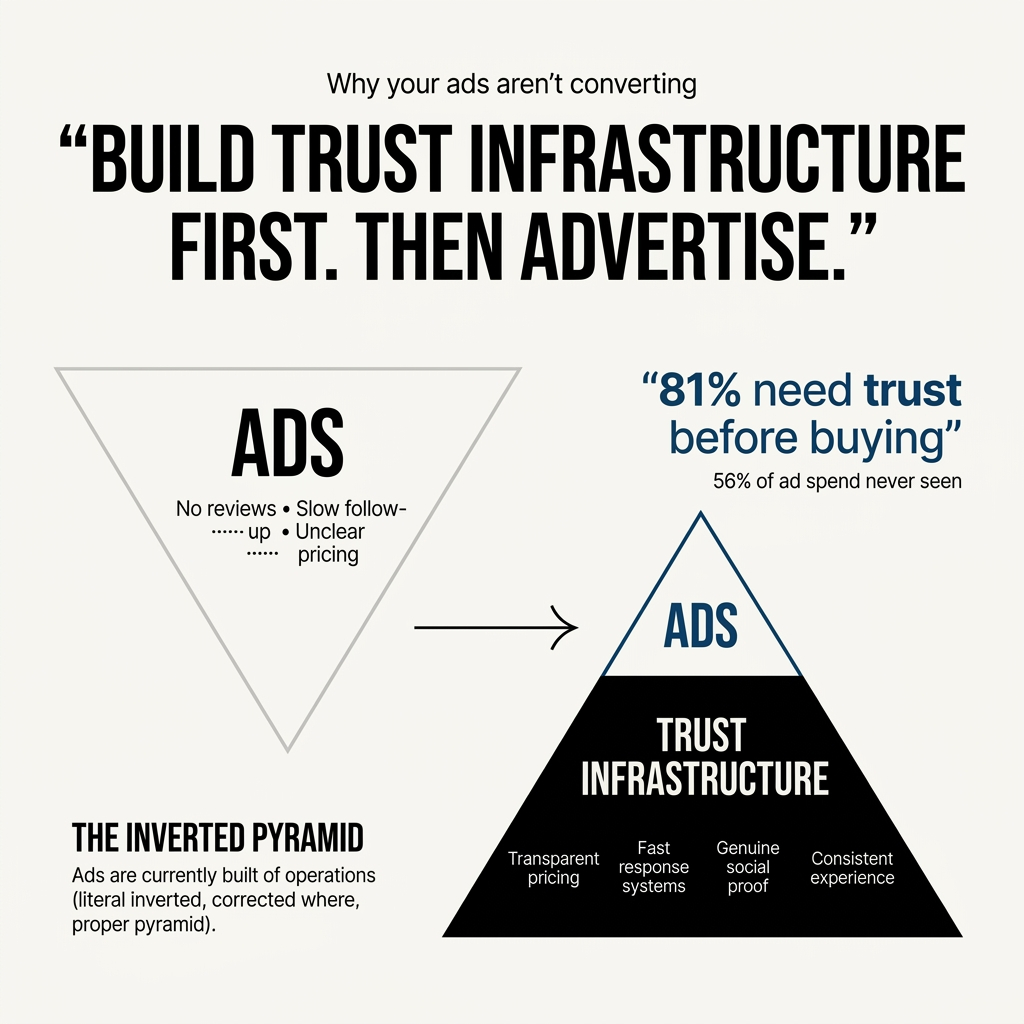
    TL;DR: Founders keep throwing money at ads wondering why nothing converts. The problem isn’t the creative. It’s that you’re asking strangers to buy from a brand they have no reason to believe in. Build the trust infrastructure first. Then advertise.

    What This Article Answers

    • Why your ads aren’t converting despite decent traffic

    • What “trust infrastructure” actually means in practice

    • What the real financial cost of a trust gap looks like

    • Why founders keep repeating this expensive mistake

    • How a Fractional CMO builds the credibility layer that makes advertising work

    Why Your Ads Aren’t Working

    You’ve spent thousands on Facebook ads. Google ads. LinkedIn campaigns. The clicks are coming in. The traffic looks decent on paper.

    But the conversions? Crickets.

    Here’s the uncomfortable truth most founders miss: pouring money into advertising whilst skipping the trust infrastructure is like building a shop with no floor. People walk in, look around, and fall straight through.

    The problem isn’t your ad creative. The problem is you’re asking strangers to buy from a brand they have zero reason to believe in.

    Is Trust the Invisible Multiplier You’re Ignoring?

    Let’s talk numbers. 81% of consumers need to trust a brand before they’ll even consider buying. Not “might consider” or “could be persuaded.” Trust is the baseline requirement.

    Meanwhile, trust in companies sits at just 47%, whilst trust in reviews from other users has rocketed to 64%. Translation: your customers trust complete strangers talking about your business more than they trust your own marketing.

    That’s the credibility gap your ads are trying to bridge. And they’re failing.

    When you don’t have trust infrastructure in place, every pound you spend on advertising is working twice as hard for half the result. You’re not just competing on price or features. You’re fighting an uphill battle against scepticism, doubt, and the lingering question: “Can I actually believe what this company is telling me?”

    Key Point: Trust isn’t a nice-to-have. It’s the baseline your advertising needs to function at all.

    What Does Trust Infrastructure Actually Look Like?

    Trust infrastructure isn’t a buzzword. It’s the foundational layer that makes your marketing credible before you ever ask someone to click “buy now.”

    It includes:

    • Transparent pricing and policies. No hidden fees. No fine print surprises. 75% of consumers won’t buy from organisations they don’t trust with their data. Unclear pricing and buried policy shifts do outsized damage to trust.

    • Consistent customer experience. Speed matters. You can have the best product in the world, but if your follow-up is slow or your processes are messy, you’ve lost the sale. The hardest part isn’t the campaign. It’s the business you’re plugging it into.

    • Social proof that’s real. Customer reviews can increase conversion rates by 270% because they address buyer uncertainty. Reviews are 12 times more trusted than traditional advertising. If you’re not actively collecting and displaying genuine customer feedback, you’re leaving money on the table.

    • Brand credibility signals. Your website, your content, your response times, your customer service. Every touchpoint either builds trust or erodes it. There’s no neutral ground.

    Most businesses skip this layer entirely. They build a website, launch some ads, and wonder why the leads aren’t converting. The answer is simple: you’re asking people to trust you before you’ve given them any reason to.

    Key Point: Trust infrastructure is the system of signals, processes, and proof points that make a first-time visitor feel safe enough to become a customer.

    What Is the Real Cost of Operating Without Trust?

    Wasted ad spend isn’t just about bad creative or poor targeting. It’s about operating in a black hole where you can’t connect marketing activity to actual business outcomes. When you don’t know which touchpoints drive real customers, you’re destined to repeat expensive mistakes.

    Google found more than 56% of ad impressions are never seen by consumers. Proxima estimates $37 billion of worldwide marketing budgets are being wasted on poor digital performance. That’s not a rounding error. That’s a systemic failure.

    And here’s the part that really stings: even when your ads do get seen, they’re fighting an uphill battle. Ad-blocking software adoption reached 42% amongst desktop users globally, costing the digital advertising industry an estimated $54 billion in lost impressions annually. People are actively avoiding your ads because they don’t trust them.

    The biggest financial costs aren’t the fines for false advertising or the wasted impressions. They’re the indirect costs: lost trust, wasted marketing spend, and delayed growth. A 10% decline in repeat customers from broken trust reduces lifetime value by 20 to 30%.

    You can’t advertise your way out of a trust problem. You have to build your way out.

    Key Point: The real cost of a trust gap isn’t just wasted impressions. It’s the compounding damage to lifetime value and growth that follows.

    Why Do Founders Keep Making the Same Mistake?

    Advertising is tangible. You can see the campaign. You can track the clicks. You can show the board a shiny new ad creative and feel like you’re doing something.

    Trust infrastructure is invisible. It’s the systems, the processes, the follow-up, the consistency. It doesn’t photograph well for investor updates. It’s not sexy.

    But it’s what actually drives conversion.

    Most trade businesses are messy behind the scenes. Inconsistent pricing, unclear processes, weak follow-up. You can have the best ad in the world, but if your business operations are chaotic, the ad will fail.

    Once a website is built, it just sits there. It doesn’t really do much to bring in leads. The same goes for campaigns launched without infrastructure. They sit there, burning budget, generating clicks that go nowhere because there’s no system to capture, nurture, and convert them.

    Key Point: Founders default to advertising because it’s visible. Trust infrastructure is invisible, but it’s what actually decides whether the advertising works.

    How Does a Fractional CMO Build the Credibility Layer?

    This is where the role of a Fractional CMO shifts from “campaign manager” to “infrastructure architect.”

    A Fractional CMO worth their salt doesn’t just launch ads. They build the credibility layer that makes those ads convert. They ask the uncomfortable questions:

    • Do you have a system to respond to leads within minutes, or are they sitting in an inbox for days?

    • Are your pricing and policies transparent, or are customers discovering hidden costs at checkout?

    • Do you have genuine customer reviews and testimonials, or is your social proof non-existent?

    • Is your brand messaging consistent across every touchpoint, or does it change depending on who’s writing the copy that week?

    These aren’t marketing questions. They’re business questions. And they determine whether your advertising budget is an investment or a bonfire.

    Brands with credibility convert more leads into customers, enhancing overall sales performance. Brand credibility is closely tied to marketing effectiveness. Brands that successfully establish credibility find it easier to implement marketing strategies, from social media campaigns to email marketing.

    The Fractional CMO builds that credibility. They don’t just run campaigns. They build the whole system to get more leads and the tools to nurture them to close. You’re getting a website, yes, but you’re also getting the marketing engine to back it up.

    Key Point: A Fractional CMO’s real job isn’t running campaigns. It’s building the credibility infrastructure that makes campaigns worth running.

    Why Is Trust the Defining Metric of 2026?

    Consumer trust in advertising climbed to 47% in 2026, an 8-percentage-point jump from 2025’s 39%. That sounds encouraging until you realise it’s still less than half. Only 40% of UK consumers trust advertising overall.

    Trust is the defining metric of this moment because it’s multidimensional, harder to fake, and directly tied to the outcomes that matter most: customer lifetime value, employee retention, brand resilience in a crisis, and sustained growth rather than viral spikes.

    • Consumers spend 51% more with retailers they trust.

    • Trusted brands command 15 to 20% price advantages over competitors.

    • 68% of shoppers will pay more for products from brands they trust.

    • 67% cite product quality and value as defining factors.

    • 63% cite brand reputation.

    • 54% highlight customer service.

    Trust converts into pricing power and margin. It’s the ultimate competitive advantage.

    But you can’t buy it with ad spend. You have to build it with infrastructure.

    Key Point: In 2026, trust isn’t just a feel-good metric. It’s the engine behind pricing power, retention, and sustainable growth.

    How Do You Stop Pouring Money Into a Leaky Bucket?

    Your advertising isn’t failing because your creative is bad or your targeting is off. It’s failing because you’re asking people to trust you before you’ve built the infrastructure that earns trust.

    A Fractional CMO who understands this doesn’t just manage campaigns. They build the credibility layer. They fix the messy processes, establish transparent pricing, implement fast follow-up systems, and create consistent customer experiences. They turn your marketing from a cost centre into a growth engine.

    Because here’s the reality: you can have the best ads in the world, but if nobody trusts you, they won’t convert.

    Build the trust infrastructure first. Then advertise.

    That’s the difference between burning budget and building a business.

    Key Takeaways

    • 81% of consumers need to trust a brand before they’ll consider buying. Trust isn’t optional. It’s the entry ticket.

    • Customers trust peer reviews 12 times more than brand advertising. Your marketing is fighting itself if you don’t have social proof.

    • 56% of ad impressions are never seen. $37 billion in marketing budgets is wasted annually on poor digital performance.

    • A 10% drop in repeat customers from broken trust reduces lifetime value by 20 to 30%.

    • A Fractional CMO’s real value isn’t in running campaigns. It’s in building the credibility infrastructure that makes campaigns convert.

    • Trusted brands command 15 to 20% price premiums and retain customers who spend 51% more.

    • Stop advertising into a trust vacuum. Build the foundation, then spend on ads.

    FAQs

    What is trust infrastructure in marketing?

    Trust infrastructure is the system of signals, processes, and proof points that make a first-time visitor feel safe enough to become a customer. It includes transparent pricing, genuine reviews, consistent messaging, fast follow-up, and reliable customer service.

    Why are my ads getting clicks but not converting?

    Clicks without conversions usually point to a trust gap. You’re attracting attention, but visitors don’t have enough reason to believe in your brand. The fix isn’t better creative. It’s building the credibility layer before you spend on ads.

    What does a Fractional CMO actually do?

    A Fractional CMO acts as your part-time chief marketing officer. Beyond running campaigns, they build the full marketing infrastructure: lead capture systems, follow-up processes, brand consistency, and the credibility signals that make advertising work.

    How does social proof affect conversion rates?

    Customer reviews increase conversion rates by up to 270% because they address buyer uncertainty at the point of decision. Reviews are 12 times more trusted than traditional advertising, making them one of the highest-leverage trust signals available.

    Is trust infrastructure only relevant for big brands?

    Not at all. Smaller businesses are often more exposed to the trust gap because they lack the brand recognition that larger companies rely on. For founders and small business owners, trust infrastructure is the difference between a campaign that works and one that drains budget.

    How much does a lack of trust cost in real terms?

    Google found that 56% of ad impressions are never seen. Proxima estimates $37 billion in marketing budgets is wasted on poor digital performance annually. A 10% decline in repeat customers from broken trust reduces customer lifetime value by 20 to 30%.

    How long does it take to build trust infrastructure?

    The foundations, transparent pricing, a review collection process, consistent brand messaging, and a lead follow-up system, can be put in place within weeks. Genuine trust compounds over time as the consistency of your customer experience builds a track record.

    Can I build trust infrastructure without a Fractional CMO?

    You can start on your own, but most founders lack the strategic oversight to identify where the gaps are. A Fractional CMO brings the outside perspective and systematic approach to spot the issues quickly and fix them in the right order.
  • I Built My Client a Brilliant Website and Got Sacked for It.

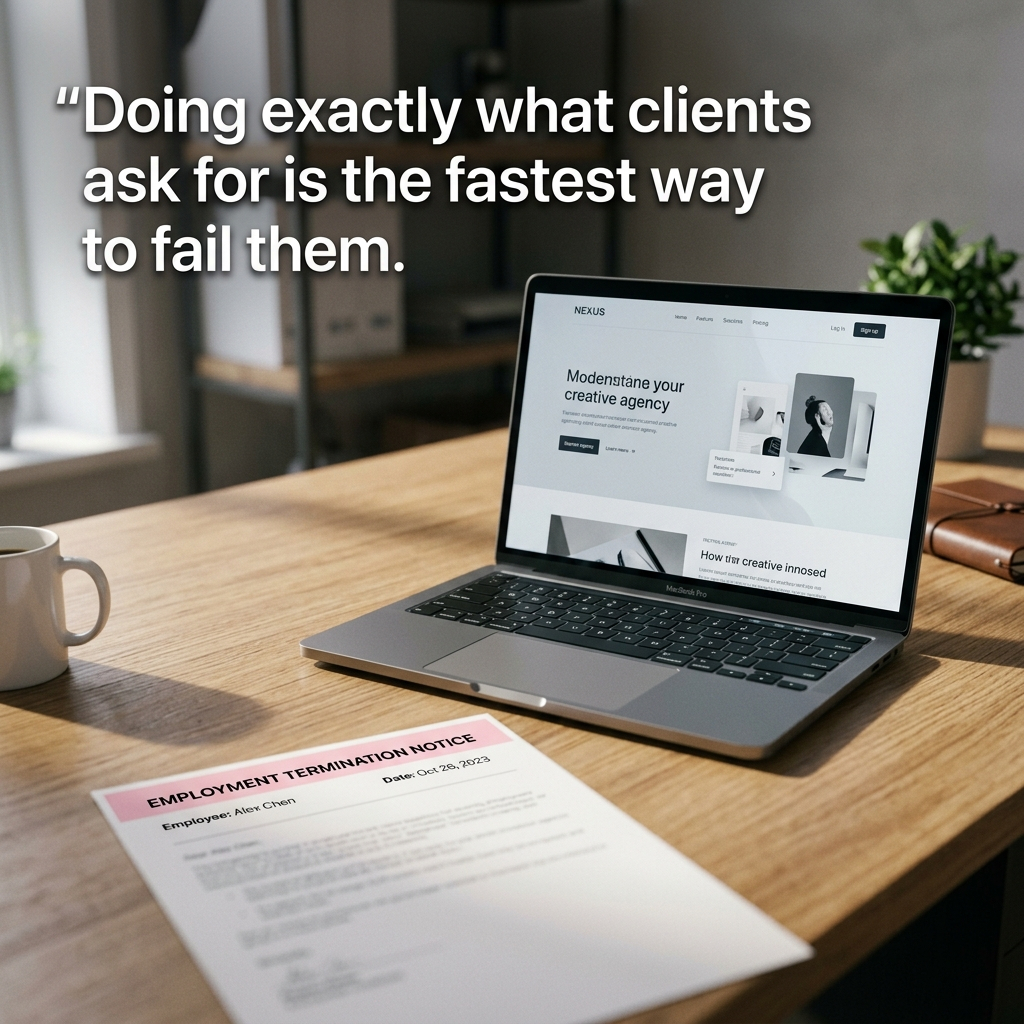
    I Built My Client a Brilliant Website and Got Sacked for It.

    TL;DR: I built a client a technically brilliant website, got them ranking, and still got sacked two years later. Why? Because the strategy was never sorted. No positioning. No market prioritisation. No clear direction. They’ve since repeated the same mistake with two more agencies. This is what happens when you commission execution before you’ve done the strategic thinking.

    At a Glance

    • A website without a strategy is just a well-designed brochure.

    • Clients asking for a website usually need something deeper: positioning, market focus, and a proper go-to-market plan.

    • Delivering exactly what a client asks for can still end in failure if the underlying strategy is missing.

    • The discovery phase isn’t optional. It’s the part that makes everything else work.

    • Without someone owning the strategy, businesses repeat the same expensive cycle, agency after agency.

    The Story

    Let me tell you about a client I worked with years ago. Great product. Real potential. Multiple industries they could sell into, each one a genuine opportunity.

    I built them a website that did everything they wanted. And more.

    Clean. Fast. Well-structured. I even got them ranking for several important phrases. By every technical measure, it was a success.

    Two years later, they sacked me.

    Here’s the part that stings: they hired another agency, went through the whole thing again, and sacked them too. Last I heard, they’d done it a third time. Same cycle. Same outcome. Same frustration.

    Years of spinning their wheels because nobody, including me early on, sat down and asked the right strategic questions before anyone touched a brief.

    I’d given them precisely what they asked for. The problem was, neither of us had properly figured out what they actually needed.

    When “I Need a Website” Doesn’t Mean “I Need a Website”

    Here’s what I’ve learned working with clients across a range of sectors: when someone says they need a website, they rarely mean they need a website.

    What they actually need is growth. New markets. A clear story that resonates with the right buyers. A way to turn a strong product into consistent, scalable revenue.

    The website is the solution they’ve landed on because it’s visible. Tangible. Something they can point to and say “we’re doing something.”

    But a website without strategy behind it is just a brochure. A well-designed, fast-loading, SEO-optimised brochure, but a brochure nonetheless. It doesn’t position the business. It doesn’t choose which markets to prioritise. It doesn’t tell a compelling enough story to make the right buyers take notice.

    This client had a product that could serve several different industries. That sounds like an advantage, and it is, but only if you’re strategic about it. Without a clear positioning decision, you end up with a website that tries to speak to everyone and connects with no one.

    They didn’t need a better website. They needed a strategy that decided who they were for, what made them different, and which channels would actually reach their best-fit buyers.

    Bottom line: A website is a tactic. Growth is the goal. Don’t confuse the two.

    The Real Problem Hiding Behind the Brief

    Most businesses, even ones with strong products, are operating without a clearly defined marketing strategy. No documented positioning. No deliberate channel mix. No decision about which market segment to go after first, and why.

    Delivering the website they asked for doesn’t solve any of these problems. You’re building a front door for a house where nobody’s agreed on the address yet.

    The hardest part of my job as a fractional CMO isn’t the marketing. It’s diagnosing what’s actually holding the business back before we spend a single penny on execution.

    In this client’s case, the underlying issue was a lack of strategic confidence. They had options: multiple industries, genuine product strengths, real differentiation. But no framework for deciding which direction to commit to. So they defaulted to the safest-feeling request: “just build us a website.”

    And I, not yet confident enough to push back hard enough, largely obliged. I tried to steer them. I raised the strategic questions. But I didn’t hold the line firmly enough when they resisted the harder conversations.

    Bottom line: When the brief is missing the strategy, the brief is wrong. Full stop.

    What I Should Have Done Differently

    After losing that client, and watching them repeat the same pattern with agency after agency, I changed how I approach every engagement.

    Now, before anyone talks about deliverables, I ask different questions:

    • Which market are we actually targeting first, and why?

    • What does this product do that nothing else does quite as well?

    • Who is the most valuable buyer, and what do they actually care about?

    • What does success look like in 12 months, in business outcomes, not deliverables?

    The answers shape everything else. The messaging. The channel mix. The content strategy. Even the website, which suddenly becomes a much more purposeful tool once there’s a strategy sitting behind it.

    With this client, there were multiple industries they could have targeted. Some were higher value. Some were easier to penetrate. Some had longer sales cycles. The strategic work would have been to map those out, score them, and make a deliberate call about where to focus first.

    That decision alone would have changed every piece of marketing we produced.

    Instead, we tried to be relevant to all of them simultaneously. The website reflected that ambiguity. Ambiguous marketing, no matter how well executed, doesn’t drive growth.

    The SEO work I did got them ranking. But ranking for what, and for whom? Without a clear positioning strategy, even good visibility doesn’t convert the way it should.

    Strategy first. Always.

    Bottom line: The questions you ask before the project starts are more important than anything you build during it.

    The Discovery Phase Nobody Wants to Pay For

    Proper strategic discovery takes time. It requires deep conversations, market analysis, and an honest assessment of where the business actually stands versus where the leadership team thinks it stands.

    Most clients want to skip it. They’ve already decided they need a website, or a campaign, or a rebrand. The strategic work feels like delay. It feels like paying for something invisible.

    But the businesses that get the strategy right before they invest in execution get dramatically better results from the same budget. Because every pound spent on marketing is pointed at the right target, with the right message, through the right channels.

    This client had budget. They had appetite. They had a strong product. What they lacked was a strategic framework to channel all of that effectively. Without someone holding that line firmly, the budget got spent on execution that looked impressive but didn’t move the needle.

    That’s on me, partly. I knew the strategy wasn’t solid. I raised it. But I didn’t push hard enough. I let the client’s urgency override my better judgement, and we both paid the price.

    Bottom line: Skipping discovery doesn’t save time. It just moves the problem further down the road, where it costs more to fix.

    Why Clients Resist What They Actually Need

    Clients want momentum. They want to feel like things are happening. Strategic thinking requires slowing down before you speed up, and that feels deeply counterintuitive when there’s commercial pressure to show results.

    They want the new website but resist committing to a clear positioning. They want leads but won’t make the tough call about which market to prioritise. They want growth but push back on the foundational work required to sustain it.

    This is especially common in businesses with multiple potential markets. The fear of narrowing focus feels like the fear of leaving money on the table. But trying to serve everyone with equal energy is usually how you end up resonating with no one particularly well.

    A fractional CMO’s job isn’t to produce marketing. It’s to hold the strategic line even when the client is pushing for shortcuts. To be the voice in the room that says: “Before we brief the agency, let’s make sure we’ve answered these questions.”

    Giving clients exactly what they ask for often fails, because what they ask for is a tactic. What they need is the strategy that makes the tactic work.

    Bottom line: Narrowing focus isn’t losing opportunity. It’s how you actually win.

    The Questions That Uncover What’s Really Going On

    Before any work begins, here’s what I now make sure to explore:

    • What problem are you actually trying to solve? Not what deliverable do you want, but what business challenge is keeping you up at night?

    • Who is your most valuable customer, and why? Not just demographics. Motivations, triggers, objections.

    • If you could only target one market this year, which would it be? Forces prioritisation and reveals how clearly the leadership team has thought this through.

    • What have you tried before, and why didn’t it work? Tells you where the real gaps are.

    • What does success look like in 12 months? In revenue terms, not deliverables.

    These questions make clients uncomfortable. They force a level of clarity that many businesses haven’t done the work to achieve. But they’re the foundation of everything. Skip them and you’re executing in the dark.

    Bottom line: Uncomfortable questions upfront beat uncomfortable conversations six months in.

    What a Proper Strategic Foundation Actually Looks Like

    When I work with clients now, the strategy comes before everything else. Not as a theoretical exercise, but as a practical decision-making framework that shapes every piece of marketing that follows.

    That means getting clear on:

    • Positioning: Who you’re for, what you do better than anyone else, and why that matters to your best-fit buyer. Not a generic value proposition. A clear, defensible point of difference.

    • Market prioritisation: Which segment to focus on first, based on value, accessibility, and strategic fit. Especially important for businesses with multiple potential markets.

    • Channel mix: Where your buyers spend their time and attention, and how to reach them there effectively. Not “let’s do social media.” A deliberate, evidence-based decision.

    • Messaging architecture: How the brand story is told consistently across every touchpoint, from the website to sales conversations to thought leadership content.

    • Measurement framework: What success looks like, how it’s tracked, and how quickly the strategy needs to adapt based on what the data tells you.

    The website, the campaign, the content strategy: these come after all of this. They’re the expression of the strategy, not a substitute for it.

    Bottom line: Strategy isn’t the overhead before the real work starts. Strategy is the real work.

    What This Means If You’re Working Without a CMO

    If you’re a growing business making marketing decisions without senior strategic input, there’s a reasonable chance you’re doing what my old client did: commissioning executional work before the strategic questions have been properly answered.

    It’s not the agency’s fault. Most agencies are briefed on deliverables, not on strategy. They build what they’re asked to build. They can’t be held responsible for a brief that was missing the foundational thinking.

    That strategic layer, the thinking that happens before the brief, is exactly what a fractional CMO brings. It’s:

    • The person who asks the uncomfortable questions before any budget is committed

    • The voice who pushes back when the stated request won’t solve the actual problem

    • The framework that ensures every piece of marketing is pointed at the right target, with the right message

    • The experience to recognise when a business is about to repeat a cycle it’s already been through before

    Without that, you can hire the best agency in the country, spend a significant budget, and still end up exactly where you started, wondering why the website isn’t working.

    My old client has now done this multiple times. Great product. Real potential. Genuinely capable team. And yet they keep arriving at the same destination because the strategic foundation was never properly built.

    That’s not a marketing problem. That’s a strategy problem. And strategy is no one’s responsibility if there’s no one in the room whose job it is to own it.

    Bottom line: A great agency with a bad brief will still deliver the wrong thing. Brilliantly.

    The Uncomfortable Reality

    The client who sacked me taught me the most valuable lesson of my career. Not about marketing, but about what marketing actually requires to work.

    Execution without strategy is just expensive activity.

    A brilliant website with no clear positioning is a brochure for a business that hasn’t decided who it’s talking to. A well-run SEO campaign without a defined target market is traffic without intent. A strong product without a go-to-market strategy is potential, indefinitely deferred.

    This client had all the ingredients. What they were missing was someone to hold the strategic line. Someone to sit across the table from the leadership team and say: “Before we talk about the website, let’s talk about the strategy. And let’s not move forward until we’ve got that right.”

    I tried. But I wasn’t yet confident enough to push hard enough when they resisted. That’s a mistake I don’t make anymore.

    Now, I tell clients upfront: the strategy isn’t optional. It’s not a nice-to-have. It’s the foundation everything else is built on. Skip it and we’re both wasting our time.

    Some clients don’t want to hear that. They’ll find someone who’ll just crack on with the brief.

    And a few years from now, they’ll be sacking that person too, starting again, still wondering why nothing ever quite works.

    I’ve seen it happen. More than once. With the same client.

    Don’t let that be you.

    Frequently Asked Questions

    Why do clients get sacked even when they deliver exactly what was asked for?

    Because the stated request is usually a tactic, not a strategy. Delivering a website, a campaign, or a rebrand without a clear strategic foundation means the work can’t generate the outcomes the client actually needs. The deliverable is correct. The direction isn’t.

    What is a fractional CMO and why does strategy matter so much to them?

    A fractional CMO is a senior marketing leader who works with a business on a part-time or project basis. Their primary role isn’t to produce marketing output. It’s to ensure that every marketing decision is grounded in a clear strategy, so that the execution, whoever does it, actually moves the business forward.

    What should happen before a website brief is written?

    Before any brief, a business should have clear answers to: who their primary target market is, what their positioning is, what makes them genuinely different, which channels their buyers use, and what success looks like in measurable business terms.

    Why do businesses skip the strategic discovery phase?

    Because it feels slow and intangible. There’s commercial pressure to show visible progress, and a website feels like progress. Strategic thinking feels like delay. In reality, skipping it just pushes the problem further down the road, where it costs more to fix.

    What happens when a business tries to target multiple markets at once without a strategy?

    The marketing becomes diluted. Messaging tries to speak to everyone and ends up resonating with no one. Even technically strong work, including good SEO, won’t convert well because there’s no clarity about who the business is actually for.

    What does a proper marketing strategy include?

    At minimum: clear positioning, a prioritised target market, a deliberate channel mix, a consistent messaging architecture, and a measurement framework. The website and campaigns come after these decisions, not before.

    How do you know when a client is about to repeat the same mistake?

    They ask for a specific deliverable without being able to clearly articulate the underlying business problem. They resist questions about positioning and market focus. They want to move quickly to execution and treat strategy as an optional extra.

    Key Takeaways

    • A website without a strategy is a brochure. A well-made one, but a brochure all the same.

    • Clients asking for executional deliverables usually have an unanswered strategic question sitting underneath.

    • The discovery phase is the most important part of any marketing engagement. Most clients want to skip it. Don’t let them.

    • Trying to market to multiple industries simultaneously, without prioritisation, produces ambiguous marketing that converts poorly.

    • A fractional CMO’s core value is holding the strategic line before, during, and after execution begins.

    • Execution without strategy is expensive activity with unpredictable outcomes.

    • If no one in the room owns the strategy, the same expensive cycle will repeat, agency after agency.

  • Your Funnel Design Isn’t The Problem. Your Response Time Is.

    Your Funnel Design Isn’t The Problem. Your Response Time Is.

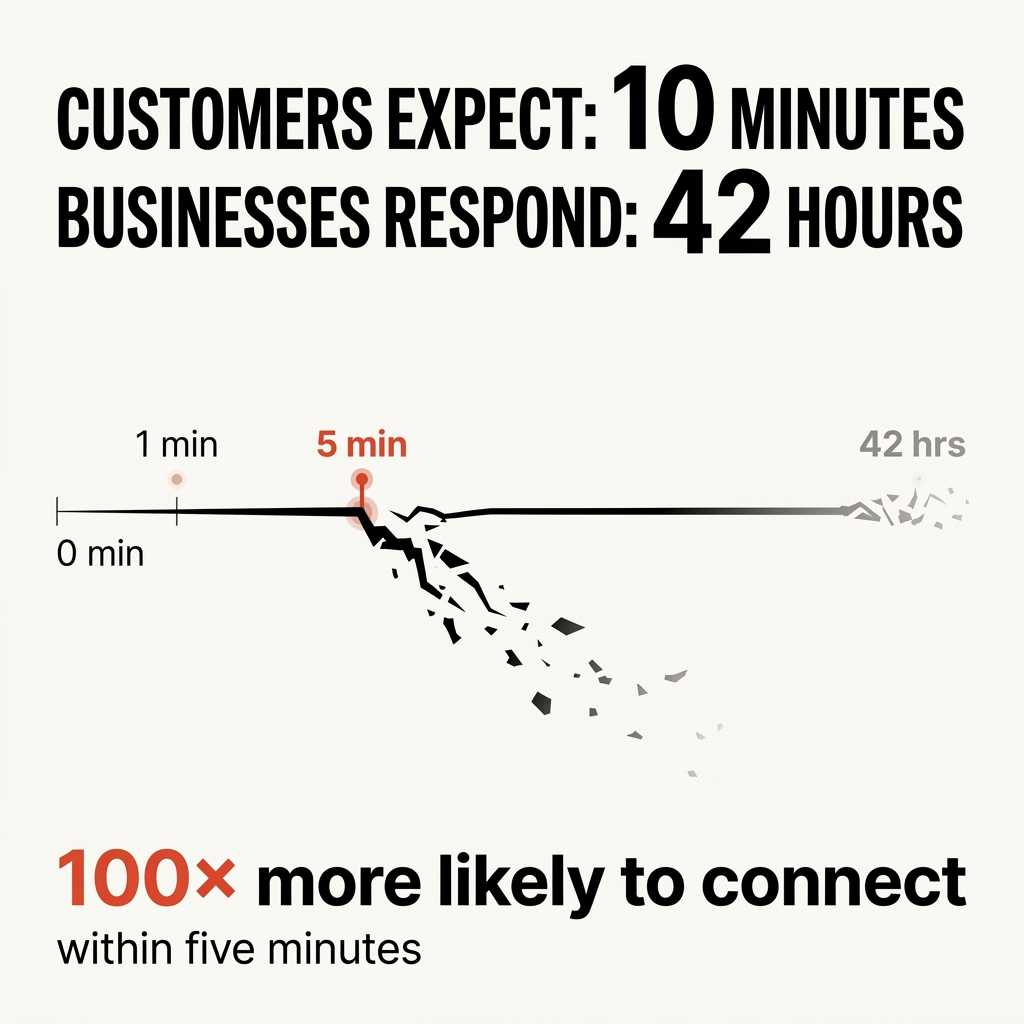
    TL;DR: You’re losing customers between enquiry and response, not because your funnel is broken, but because you’re too slow. Responding within five minutes makes you 100x more likely to make contact. Most businesses take 42 hours. Fix that, and your conversion rate climbs without touching a single landing page.

    At A Glance

    • Responding within 5 minutes makes you 100x more likely to reach a lead and 21x more likely to qualify them.

    • Calling within 1 minute of an enquiry boosts conversions by 391%.

    • 78% of customers buy from the first company that responds.

    • The average business response time is 42 hours. Customers expect a reply in under 10 minutes.

    • Clients who fix their response time close 8-24% more customers, with zero changes to their offer or pitch.

    Sound Familiar?

    You’ve spent months perfecting your marketing funnel.

    The landing pages are optimised. The copy is sharp. The lead magnets are compelling. You’re driving traffic, generating enquiries, and watching the numbers tick up in your CRM.

    Then you check your conversion rate and wonder what went wrong.

    Here’s what most founders miss: the gap between enquiry and response is where your revenue disappears.

    Whilst you’re obsessing over funnel architecture, your competitors are winning customers simply by responding faster. The data proves it, and the gap between what businesses know and what they actually do is staggering.

    What Is The Five-Minute Window?

    Research from Harvard Business Review and MIT reveals something that should stop you in your tracks: responding to a new lead within five minutes makes you 100 times more likely to make contact and 21 times more likely to qualify the lead.

    Read that again.

    100 times more likely to make contact.

    The original research, conducted by Dr James Oldroyd at MIT, analysed over 15,000 leads. The findings weren’t subtle. After just five minutes, the odds of qualifying a lead plummet by 80%. Conversion rates drop by eight times when follow-up is delayed by a mere five minutes.

    This isn’t about being slightly better. The deterioration of prospect interest is exponential. Every minute that passes after initial contact has a disproportionate impact on your probability of conversion.

    Bottom line: The five-minute window isn’t a nice-to-have. It’s the difference between a paying customer and a lead that goes cold before you’ve finished your coffee.

    What Is The One-Minute Rule?

    Research from Velocify found that calling a lead within one minute of their enquiry boosts conversion rates by 391%. That’s not a typo.

    There’s a 391% increase in actual sales conversions, not just bookings, when inbound leads are contacted within the same minute they submit a demo request.

    The principle is blunt: 78% of customers buy from the first company that responds. Being first often matters more than being best.

    Your funnel design doesn’t matter if someone else answers the phone first.

    Bottom line: Speed isn’t a sales tactic. It’s the sales tactic.

    How Bad Is The Response Time Problem?

    The average response time across industries is 42 hours. Meanwhile, 82% of consumers consider an “immediate response” to their marketing, sales, and customer service concerns to be important or very important. Most define immediate as within 10 minutes.

    Let that sink in.

    Customers expect a response in 10 minutes. Businesses respond in 42 hours.

    • Only 0.1% of inbound leads are engaged in under five minutes.

    • Only 23% of companies responded within five minutes.

    • 42% took more than 24 hours.

    If you respond quickly, you’re already ahead of 99.9% of your competition. That’s not a small edge. That’s a chasm.

    Bottom line: The execution gap is enormous. Closing it doesn’t require genius. It requires urgency.

    Why Response Time Is The Highest-Impact Operational Lever

    Moving a lead from the 24-hour bucket into the under-five-minute bucket roughly 2.6x’s the close rate, from 12% to 32%. No change to the offer. No change to the rep. No change to the pitch.

    The lever is purely operational.

    You’re not redesigning your entire marketing strategy. You’re not rebuilding your product. You’re not hiring a new sales team.

    You’re fixing a process problem that’s costing you customers right now.

    Real-world result: clients closing between 8% and 24% more customers simply by getting back to leads faster. That’s it. Nothing fancy.

    Bottom line: This is the most unsexy, high-return fix in your entire business. You’re welcome.

    How Much Budget Is Being Wasted On Slow Follow-Up?

    Last year, B2B marketers spent over $4.6 billion on advertising. Nearly $2.7 billion of that investment was wasted due to slow or no follow-up.

    More than 30% of leads are never contacted.

    You’re paying to generate leads, then ignoring them. It’s like filling a bucket with a hole in the bottom and wondering why it’s empty.

    The problem isn’t your funnel. The problem is what happens after someone enters it.

    Bottom line: Slow follow-up doesn’t just lose customers. It sets fire to your ad spend.

    Why Does This Keep Happening?

    Most trade businesses are messy behind the scenes. Inconsistent pricing. Unclear processes. Weak follow-up.

    AI tools respond instantly, but they often expose bigger problems underneath: poor sales skills, lack of structure, missed opportunities. The hardest part isn’t the technology. It’s the business you’re plugging it into.

    Response time isn’t just about speed. It’s about having systems that work when a lead comes in. Knowing what to say. How to qualify. What happens next.

    Businesses that excel at response time have done the unglamorous work: mapping processes, training teams, eliminating bottlenecks.

    If you can’t respond quickly, it usually means your operations are broken. Response time is one of the best diagnostics in the business.

    Bottom line: Speed is a symptom of operational health. If you’re slow, something deeper needs fixing.

    What Do Customers Actually Expect?

    83% of customers expect to interact with someone immediately upon contact, according to Salesforce. Almost 66% of buyers expect a response within 10 minutes to any marketing, sales, or customer service enquiry.

    More than half of your customers say slow responses are their biggest frustration.

    Not product issues. Not pricing. Response speed.

    Customer expectations are rising. The companies that meet them win. The companies that don’t lose to someone who will.

    Bottom line: Your customers have already set the bar. The question is whether you’re clearing it.

    How To Actually Fix Your Response Time

    Step 1: Measure Where You Are

    Start by tracking how long it takes from enquiry to first contact. Most businesses don’t know this number, which is exactly why they can’t improve it.

    Step 2: Set A Target

    Five minutes is the gold standard. Even getting to 30 minutes puts you ahead of most competitors.

    Step 3: Build Systems That Enable Speed

    • AI receptionists that respond within 60 seconds.

    • Alerts that notify your team the moment a lead comes in.

    • Restructured sales processes that remove delay at every step.

    The specific solution matters less than the commitment to speed.

    Step 4: Train Your Team On The First Five Minutes

    The goal isn’t to close the deal immediately. It’s to make contact, qualify the lead, and lock in the next step.

    Step 5: Remove Friction Ruthlessly

    Every step between enquiry and response is a chance for delay. Simplify until it hurts.

    Bottom line: Speed to lead isn’t a culture shift. It’s a process shift. Map it, build it, stick to it.

    Why Response Time Is Your Biggest Competitive Advantage

    Response time is one of the few competitive advantages that’s both high-impact and widely available.

    You don’t need a bigger budget. You don’t need better technology. You don’t need a revolutionary product.

    You need to answer faster than your competitors.

    The data is clear. The opportunity is massive. The execution gap is real.

    Whilst everyone else is redesigning their funnels, you can win by simply picking up the phone.

    Bottom line: The competitive advantage hiding in plain sight isn’t a secret. It’s just a phone call you haven’t made fast enough yet.

    Frequently Asked Questions

    What is the ideal lead response time?

    Five minutes or under. Research shows that responding within five minutes makes you 100x more likely to reach a lead and 21x more likely to qualify them. Even hitting 30 minutes puts you ahead of most businesses.

    Why does response speed affect conversion rates so much?

    Because buyer intent is at its peak the moment someone enquires. The longer you wait, the more that intent fades. Interest drops off exponentially, not gradually.

    How does response time compare to funnel design in driving conversions?

    In most cases, response time has a bigger impact. Moving a lead from a 24-hour response to under five minutes roughly 2.6x’s your close rate, with no changes to your offer or pitch.

    What percentage of companies respond to leads within five minutes?

    Only 23%. And just 0.1% of inbound leads are engaged in under five minutes. Most businesses take over 24 hours.

    What do customers consider an “immediate” response?

    The majority define it as within 10 minutes. Yet the average business response time is 42 hours. That gap is your opportunity.

    Can AI tools fix slow response times?

    AI can respond instantly, but it often exposes deeper issues like weak sales processes and poor qualification. Technology speeds up the response. You still need a solid system behind it.

    How much revenue is lost from slow follow-up?

    In B2B alone, nearly $2.7 billion in ad spend was wasted last year due to slow or no follow-up. More than 30% of leads are never contacted at all.

    What’s the first step to improving lead response time?

    Measure it. Most businesses have no idea how long their current response time is. You can’t fix what you don’t track.

    Key Takeaways

    • Responding within five minutes makes you 100x more likely to reach a lead and 21x more likely to qualify them.

    • 78% of customers buy from the first company that responds. Speed beats quality in the race to conversion.

    • The average business takes 42 hours to respond. Customers expect a reply in 10 minutes. That gap is your opportunity.

    • Moving from 24-hour to five-minute responses roughly 2.6x’s your close rate, with zero changes to your offer.

    • Poor response time is usually a symptom of broken operations, not just a scheduling problem.

    • $2.7 billion in B2B ad spend is wasted annually on leads that never get followed up. Don’t add to that number.

    • You don’t need a fancier funnel. You need to answer faster than the person next to you.

  • The £20,000 Missed Call That Exposed a £127,000 Problem

    The £20,000 Missed Call That Exposed a £127,000 Problem

    TL;DR: Missing follow-ups isn’t a time problem. It’s a marketing infrastructure problem. One landscaper lost a £20,000 contract because the right systems weren’t in place. The average business loses £127,000 a year the same way. Fix the infrastructure. Keep the revenue.

    At a Glance

    • Missed follow-ups cost the average business £127,000 annually in lost revenue.

    • Up to 73% of leads never get contacted at all.

    • Responding within 5 minutes can increase conversions by up to 100x vs. a 30-minute delay.

    • 78% of customers buy from the first company that responds.

    • Infrastructure is the fix. Not longer hours, not more discipline.

    The Missed Call That Started It All

    A landscaper missed a phone call.

    One missed call. They meant to ring back. They were busy finishing a job, dealing with suppliers, managing the crew. You know how it goes.

    By the time they remembered to follow up, a competitor had already won the £20,000 hard landscaping contract.

    The landscaper heard about it from the rival who got the work. That stings.

    Here’s what makes this story important: this wasn’t laziness or incompetence. This was a capable business owner doing exactly what capable business owners do — working hard, staying busy, keeping things moving.

    And still losing £20,000 because the infrastructure wasn’t there to catch what slipped through the cracks.

    Key Point: One missed call doesn’t just lose a lead. It can hand £20,000 straight to your competitor.

    Is “Being Too Busy” Really the Problem?

    Most founders think missed follow-ups are a time management problem.

    They’re not.

    They’re a marketing infrastructure problem.

    The average business loses £127,000 annually in revenue from missed follow-ups alone. Not from bad products. Not from poor service. From leads that fall through gaps in broken systems.

    Studies show that as few as 27% of leads ever get contacted. That means up to 73% are completely wasted.

    Spent £100,000 on lead generation? If 70% of those leads never get a response, you’ve torched £70,000 of that budget.

    That’s not a time problem. That’s a systems problem.

    Key Point: Lost leads aren’t a willpower issue. They’re a sign your systems aren’t built to keep up with your business.

    Why “I’m Too Busy” Is a Symptom, Not the Disease

    I’ve worked with enough trade businesses to recognise the pattern.

    The owner is working until 11pm, manually booking jobs into a little black book. Getting back to a few people here and there. Swapping appointments around, trying to fit everything in.

    Genuinely busy. Genuinely trying. And genuinely bleeding revenue because the infrastructure can’t keep up with the workload.

    According to McKinsey, employees spend nearly 20% of the workweek searching for information or managing internal communication instead of doing high-value work. That operational friction hits lead response speed directly.

    Most slow response times aren’t caused by lazy teams. They’re caused by operational overload.

    The problem isn’t that you’re too busy. The problem is that your systems are making you too busy to do the things that actually grow your business.

    Key Point: Busyness is what you feel. Broken infrastructure is what’s causing it.

    The Infrastructure Gap Nobody Talks About

    Most trade businesses are messy behind the scenes.

    Inconsistent pricing. Unclear processes. Weak follow-up.

    These structural weaknesses stay hidden until something exposes them — like trying to respond to leads quickly and realising you don’t have a system that makes that possible.

    What the Data Actually Shows

    • Speed matters more than you think. Responding within 5 minutes increases conversion rates by up to 100x compared to a 30-minute delay. Despite this, many businesses rely on manual workflows and average response times of over 42 hours.

    • Your competitors are faster. 78% of customers buy from the first company that responds. Speed determines who wins deals.

    • Customer expectations have shifted. Almost 66% of buyers expect a response within 10 minutes to any marketing, sales, or customer service enquiry.

    Your infrastructure gap isn’t theoretical. It’s costing you real money right now.

    Key Point: The gap between how fast you respond and how fast customers expect a response is where revenue disappears.

    What Proper Infrastructure Actually Looks Like

    I’ve seen what happens when businesses fix their infrastructure.

    One client was spending evenings until 11pm manually managing bookings. We put in a system that captured leads quickly and efficiently. They could check their calendar, see what was coming up, and handle the day-to-day without drowning in admin.

    The biggest win wasn’t time saved. It was that they could actually take a day off during busy periods because the system kept working without them.

    That’s what infrastructure does. It makes your business less dependent on you being available 24/7.

    Another client started closing between 8% and 24% more customers simply by responding faster. Speed is everything.

    The infrastructure didn’t make them work harder. It made their existing effort actually count.

    Key Point: Good infrastructure doesn’t add hours to your day. It makes the hours you already work worth more.

    What’s the ROI of Fixing Your Infrastructure?

    Here’s what happens when you invest in proper marketing infrastructure:

    • 91% of businesses report reduced customer acquisition costs after implementing CRM systems.

    • Businesses typically see an average return of £8.71 for every £1 spent on CRM.

    • CRM increases conversion rates by as much as 300% when used to improve follow-ups, segmentation, and sales process visibility.

    • According to Nucleus Research, companies realise an average return of £5.44 for every £1 invested over the first 3 years. Most recover their investment cost in under 6 months.

    Infrastructure investment isn’t a cost. It’s profitable.

    Key Point: The numbers aren’t close. Every pound you invest in proper systems returns many more.

    Small Businesses Can Finally Compete

    The technology that used to be available only to big companies is now accessible to everyone.

    Small local businesses and trade businesses now have access to the same infrastructure that enterprise companies use to capture and nurture leads.

    You don’t need a massive budget. You need the right systems working together.

    • A website that actively captures leads instead of just sitting there.

    • Automation that responds instantly when someone reaches out.

    • A booking process that doesn’t require you to juggle a diary until midnight.

    These aren’t luxuries anymore. They’re table stakes.

    Key Point: The playing field has levelled. The only question is whether you’re choosing to play on it.

    Stop Blaming Yourself for Systemic Failures

    If you’re missing 10-20 leads a month, that’s significant revenue disappearing.

    If you’re working late into the night trying to keep up with manual processes, that’s not a personal failing. That’s a systems failure.

    The landscaper who lost the £20,000 job wasn’t incompetent. They were operating without the infrastructure needed to compete in a market where speed determines who wins.

    You can work harder. You can stay up later. You can try to be more disciplined about follow-ups.

    Or you can fix the infrastructure that’s making you work that hard in the first place.

    Key Point: You’re not the problem. Your systems are. And systems, unlike people, can be fixed.

    What to Do Next

    Start by auditing where leads are falling through the cracks.

    • How many enquiries do you get each week?

    • How many actually get a response?

    • How quickly?

    Look at your manual processes. Which ones consume your evenings? Which ones could be automated or systematised?

    Calculate what missed leads are actually costing you. Not in theory. In real money.

    Then invest in the infrastructure that plugs those gaps.

    • CRM systems.

    • Automation tools.

    • Proper lead capture on your website.

    • Systematic follow-up processes.

    The businesses that grow aren’t the ones working the hardest. They’re the ones with infrastructure that makes their effort count.

    That £20,000 missed call was expensive. But the real cost was the £127,000 in annual revenue lost because the infrastructure wasn’t there to catch what slipped through.

    You can’t afford to keep blaming yourself for problems that infrastructure should be solving.

    Fix the systems. Keep the revenue.

    Key Takeaways

    • Missed follow-ups are an infrastructure problem, not a time management problem.

    • The average business loses £127,000 a year from leads that simply don’t get followed up.

    • Up to 73% of leads are never contacted. That’s not a people problem. That’s a systems problem.

    • Responding within 5 minutes vs. 30 minutes increases conversion rates by up to 100x.

    • 78% of customers buy from the first business that responds. Speed wins.

    • Proper infrastructure reduces customer acquisition costs, increases conversions, and pays back £5-8 for every £1 invested.

    • Stop working harder to compensate for broken systems. Fix the systems.

    FAQs

    What is a marketing infrastructure problem?

    A marketing infrastructure problem is when a business lacks the systems, tools, and processes needed to consistently capture, respond to, and follow up with leads. It’s often mistaken for a time management or effort problem.

    How much revenue do businesses lose from missed follow-ups?

    The average business loses approximately £127,000 annually in revenue from missed follow-ups alone, according to lead management research.

    How quickly should a business respond to a new lead?

    Within 5 minutes where possible. Studies show that responding within 5 minutes increases conversion rates by up to 100x compared to a 30-minute delay. Almost 66% of buyers expect a response within 10 minutes.

    What percentage of leads never get contacted?

    Research suggests as few as 27% of leads ever get contacted, meaning up to 73% are completely wasted.

    What is a CRM and why does a small business need one?

    A CRM (Customer Relationship Management system) is a tool that tracks leads, automates follow-ups, and manages customer interactions. Businesses report an average return of £8.71 for every £1 spent, with 91% seeing reduced customer acquisition costs after implementation.

    Is marketing automation only for large businesses?

    No. The technology has become far more accessible. Small local and trade businesses now have access to the same lead capture, automation, and follow-up tools that enterprise companies use, without needing an enterprise budget.

    How do I know if I have an infrastructure gap?

    Start with three questions: How many enquiries do you receive each week? How many get a response? How quickly? If you can’t answer all three with confidence, you have an infrastructure gap.

    What’s the first step to fixing a broken follow-up system?

    Audit where leads are falling through the cracks. Map out your current process from first enquiry to first response. Identify every manual step and calculate the cost of delays. Then prioritise automation and systems that plug those specific gaps.

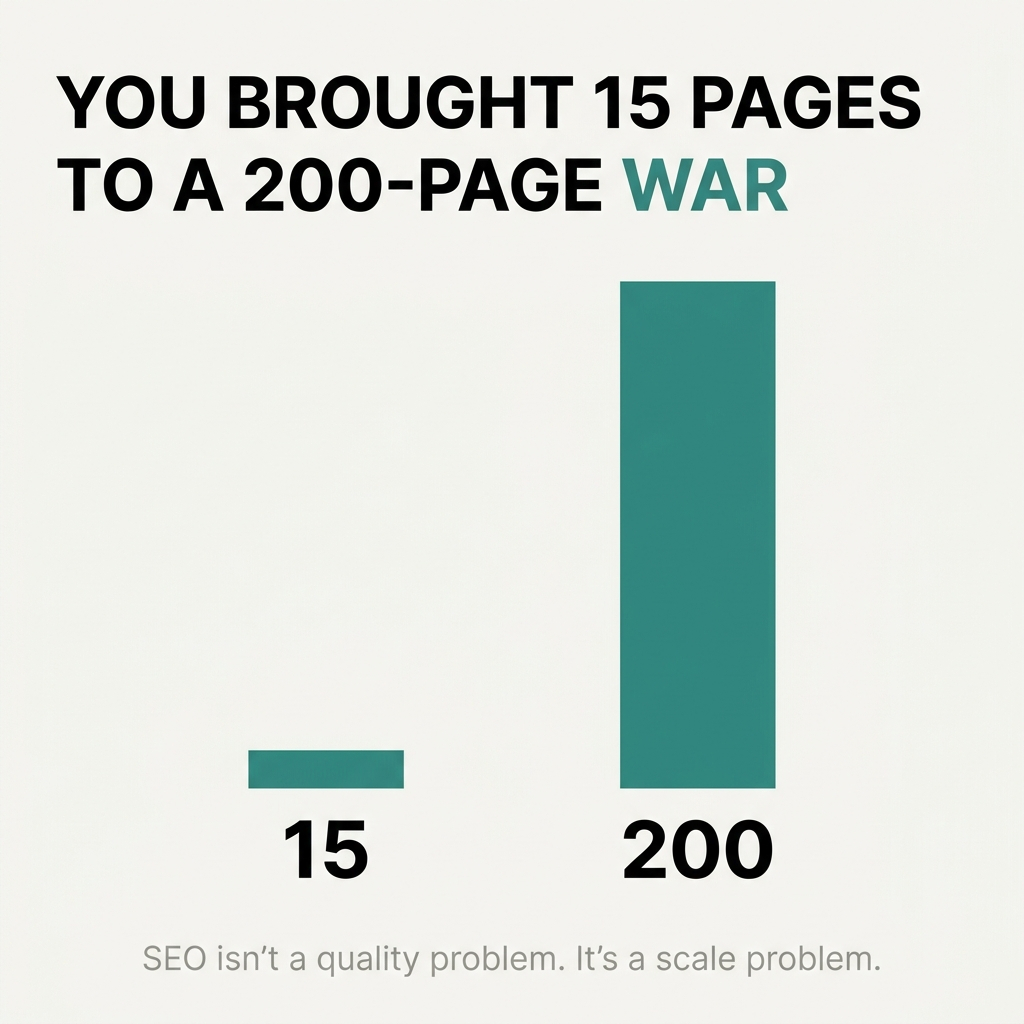
  • Your Website SEO Strategy Needs to Be Three Times Bigger Than You think.

    Your Website SEO Strategy Needs to Be Three Times Bigger Than You think.

    TL;DR: AI Overviews now appear in nearly half of all Google searches. Organic click-through rates have collapsed. Your traffic is down, but that’s not the whole story. Staying visible means your SEO strategy needs to stretch well beyond your website.

    • AI Overviews appear on 48% of Google searches as of March 2026, up from 31% in early 2025.

    • Organic CTR drops 61% for queries with AI Overviews. Paid CTR drops 68%.

    • Search impressions fell 53.8% between 2023 and 2025, but qualified customer actions only dropped 5%.

    • Only 45% of brands dominating traditional search appear in AI recommendations.

    • 86% of AI citations come from brand-managed sources. You have more control than you think.

    You’re checking Google Search Console and the numbers look wrong.

    Non-branded clicks are down year-over-year. Traffic from generic searches has dropped. You haven’t changed a thing, but the dashboard tells a completely different story than it did twelve months ago.

    Multi-location brands are comparing their 2026 data to 2025 and trying to work out what went wrong. The answer is simpler than you’d like: the rules changed whilst you were still playing the old game.

    What Are AI Overviews and Why Do They Dominate Search Now?

    AI Overviews appear on 48% of all Google searches as of March 2026. That’s up from 34.5% in December 2025 and 31% in February 2025.

    This isn’t a test feature. It’s the dominant search experience.

    When someone searches “best plumber near me” or “emergency electrician,” they get an AI-synthesised answer at the top of the page. They read it, make a decision, and move on. They don’t click through to your website.

    Organic click-through rates have collapsed by 61% for queries with AI Overviews, according to Seer Interactive’s September 2025 study. Paid clicks dropped 68%.

    Your traffic isn’t down because you’re doing something wrong. It’s down because the structure of search changed around you.

    Key Point: AI Overviews aren’t on their way. They’re here, they’re eating your click-through rates, and they’re not going anywhere.

    Where Is Visibility Now? Across Every Platform Your Customers Use

    Google Search isn’t the only place people find businesses anymore. Your potential customers are discovering you through:

    • Google Maps and “Ask Maps” features

    • AI Overviews and AI Mode

    • ChatGPT, Gemini, and Perplexity

    • Apple Maps

    • Social search on TikTok, Instagram, and LinkedIn

    Each platform has its own algorithm. Each one weights different signals. Each one requires a different optimisation strategy.

    You can’t just optimise for Google anymore. You need to optimise for the entire ecosystem of discovery channels your customers are using.

    Key Point: Your customers are scattered across a dozen platforms. Your SEO strategy needs to follow them there.

    Why the Metrics You’re Tracking No Longer Reflect Reality

    Here’s the uncomfortable truth: traffic is no longer the single source of truth.

    Search impressions per location fell 53.8% between 2023 and 2025, according to Birdeye’s State of Google Business Profile 2026. But qualified customer actions only declined 5% over the same period.

    Read that again.

    Impressions dropped by more than half. Actual customer actions barely moved.

    Your dashboard is capturing the wrong signals. Fewer people are clicking through to your website, but the people who do are more qualified. AI search visitors convert at 4.4 times the rate of traditional organic visitors.

    Fewer visits. But each visit is worth a lot more.

    Key Point: Less traffic, better quality. Stop obsessing over volume. Start measuring what moves the needle.

    Why Citation in AI Answers Matters More Than Clicks

    The old SEO playbook: rank in position one, two, or three. The new playbook: get cited in AI-generated answers.

    Brands cited in AI Overviews earn 35% more organic clicks and 91% more paid clicks than non-cited brands on the same search results page.

    Being mentioned in the AI answer is now more valuable than ranking first in the blue links below it.

    But here’s the kicker: only 45% of brands that dominate traditional search rankings appear in AI recommendations. SOCi’s audit of 350,000+ business locations found that more than half the brands winning in traditional SEO are completely invisible in AI.

    The signals that determine AI citation are different from the signals that determine traditional rankings. Backlink authority matters less. Entity consistency, structured data, and third-party consensus matter more.

    Key Point: Winning at traditional SEO doesn’t get you a seat at the AI table. You need to earn that separately.

    How Your Knowledge Graph Representation Determines AI Eligibility

    Google’s Knowledge Graph contains 5 billion+ entities and 500 billion+ facts. Gemini AI is trained on it.

    That one fact changes your entire approach.

    Your Knowledge Graph representation determines whether you appear in AI Overviews, AI Mode, and Gemini-powered answers. If Google can’t clearly identify, classify, and connect your brand within its Knowledge Graph, you won’t be cited. Full stop.

    Entity SEO is the discipline of ensuring Google understands who you are, what you do, and how you relate to other entities in your industry. It’s no longer optional.

    According to Yext research, 86% of citations in AI responses come from brand-managed sources like your website, listings, and local pages. Your data management directly determines your AI visibility.

    Key Point: Your Knowledge Graph presence is your AI search CV. If it’s thin or inconsistent, you won’t get the call.

    How Local Search Shifted From “Near Me” to “Best for Me”

    People used to search “plumbers near me.” Now they search “best affordable plumbers with same-day service.”

    AI algorithms interpret complex, conversational queries. They understand intent. They make recommendations based on context, not just proximity.

    Local search is no longer dictated by how close you are. It’s shaped by how clearly AI tools can understand, trust, and recommend your business.

    The “near me” search is being replaced by “best for me” searches. AI is making the final call.

    Key Point: Proximity used to win local search. Now it’s trust, data clarity, and how well your online presence tells your story.

    Zero-Click Searches: Why 60% of Queries Never Reach Your Website

    Nearly 60% of all Google searches now end without a single click to any website.

    Semrush’s 2025 zero-click study found that 58.5% of US searches and 59.7% of EU searches conclude entirely within Google’s search results page. Bain’s research finds that 80% of consumers rely on these “zero-click” results at least 40% of the time.

    Your website traffic is down because people are getting their answers without ever visiting a website. This isn’t temporary.

    Gartner projects that 25% of organic search traffic will shift to AI chatbots and voice assistants by the end of 2026. By 2028, they predict 25-50% traditional search volume reductions depending on vertical.

    Key Point: Zero-click isn’t a bug in the system. It is the system now.

    What This Means for Your Strategy

    You need to build a much bigger SEO strategy. One that extends well beyond your website and traditional search rankings.

    1. Unify your data across all platforms

    Your business name, address, phone number, services, and descriptions need to be consistent everywhere. Google Maps, Apple Maps, Bing, Facebook, industry directories, review sites. Inconsistent data confuses AI algorithms and kills your citation eligibility.

    2. Optimise for entity relationships

    Build structured data markup on your website. Create clear relationships between your brand, your services, your locations, and your people. Help AI understand exactly who you are and what you do.

    3. Manage your reputation systematically

    Reviews, ratings, and third-party mentions feed AI algorithms. A systematic approach to reputation management directly impacts your AI visibility.

    4. Create content for AI consumption

    AI engines synthesise information from sources they trust. Your website content needs to be clear, factual, and structured in ways that AI can easily parse and cite.

    5. Track the right metrics

    Stop obsessing over impression counts. Start tracking AI brand mentions, AI citations, share of voice in AI search, branded search impressions, and qualified engagement metrics.

    Traffic is down. That’s fine. The real question is whether qualified engagement is stable or growing.

    The Bigger Picture: From Website SEO to Distributed Visibility

    Your website still matters. But it’s no longer the centre of your digital presence.

    Your presence is now distributed across dozens of platforms, each with its own algorithm, each requiring its own optimisation strategy.

    The brands that win in this environment stop thinking about “website SEO” and start thinking about “distributed visibility management.”

    You need to be findable, trustworthy, and citable across every platform where your customers might discover you. That’s a much bigger strategy than traditional SEO ever required.

    But it’s the strategy that works in 2026. The rules changed. Time to play by the new ones.

    Frequently Asked Questions

    What are AI Overviews and why do they affect my website traffic?

    AI Overviews are AI-generated answer summaries that appear at the top of Google search results. They give users direct answers without requiring a click to any website, which is why organic click-through rates have dropped significantly.

    How much have AI Overviews reduced organic click-through rates?

    According to Seer Interactive’s September 2025 study, organic CTR dropped 61% for queries with AI Overviews. Paid click-through rates dropped 68%.

    What percentage of Google searches now end without a click?

    Nearly 60% of all Google searches end without a click to any website, according to Semrush’s 2025 zero-click study.

    What is entity SEO and why does it matter now?

    Entity SEO is the practice of ensuring search engines can clearly identify, classify, and connect your brand within their knowledge systems. It matters because AI citations are determined by entity clarity and data consistency, not backlinks or page rankings.

    How can I get my brand cited in AI Overviews?

    Unify your business data across all platforms, build structured data markup on your website, manage your reviews systematically, and create clear and factual content that AI can easily parse and reference.

    Do I still need traditional SEO if AI Overviews are taking over?

    Yes, but it’s no longer sufficient on its own. Traditional SEO and AI citation optimisation require different signals. You need both, alongside a presence across multiple discovery platforms.

    What metrics should I track instead of organic impressions?

    Track AI brand mentions, AI citation frequency, share of voice in AI search, branded search impressions, and qualified engagement metrics like calls, bookings, and conversions.

    Is the decline in search traffic permanent?

    Gartner projects 25-50% traditional search volume reductions by 2028 depending on vertical. The shift is structural, not cyclical. Brands need to adapt their strategies now rather than waiting for a recovery that isn’t coming.

    Key Takeaways

    • AI Overviews now appear on 48% of Google searches. Organic CTR has dropped 61% as a result.

    • Search impressions fell by more than half between 2023 and 2025, but qualified customer actions barely moved, because AI search visitors convert at 4.4x the rate of traditional visitors.

    • Only 45% of traditional search leaders appear in AI recommendations. Winning at old SEO doesn’t guarantee AI visibility.

    • 86% of AI citations come from brand-managed sources, so your data management directly determines your AI search presence.

    • Entity consistency, structured data, and third-party reputation signals now matter more than backlinks for AI citation.

    • Zero-click searches represent nearly 60% of all queries. This isn’t a trend. It’s the new normal.

    • Your strategy needs to expand from “website SEO” to “distributed visibility management” across every platform your customers use to find you.