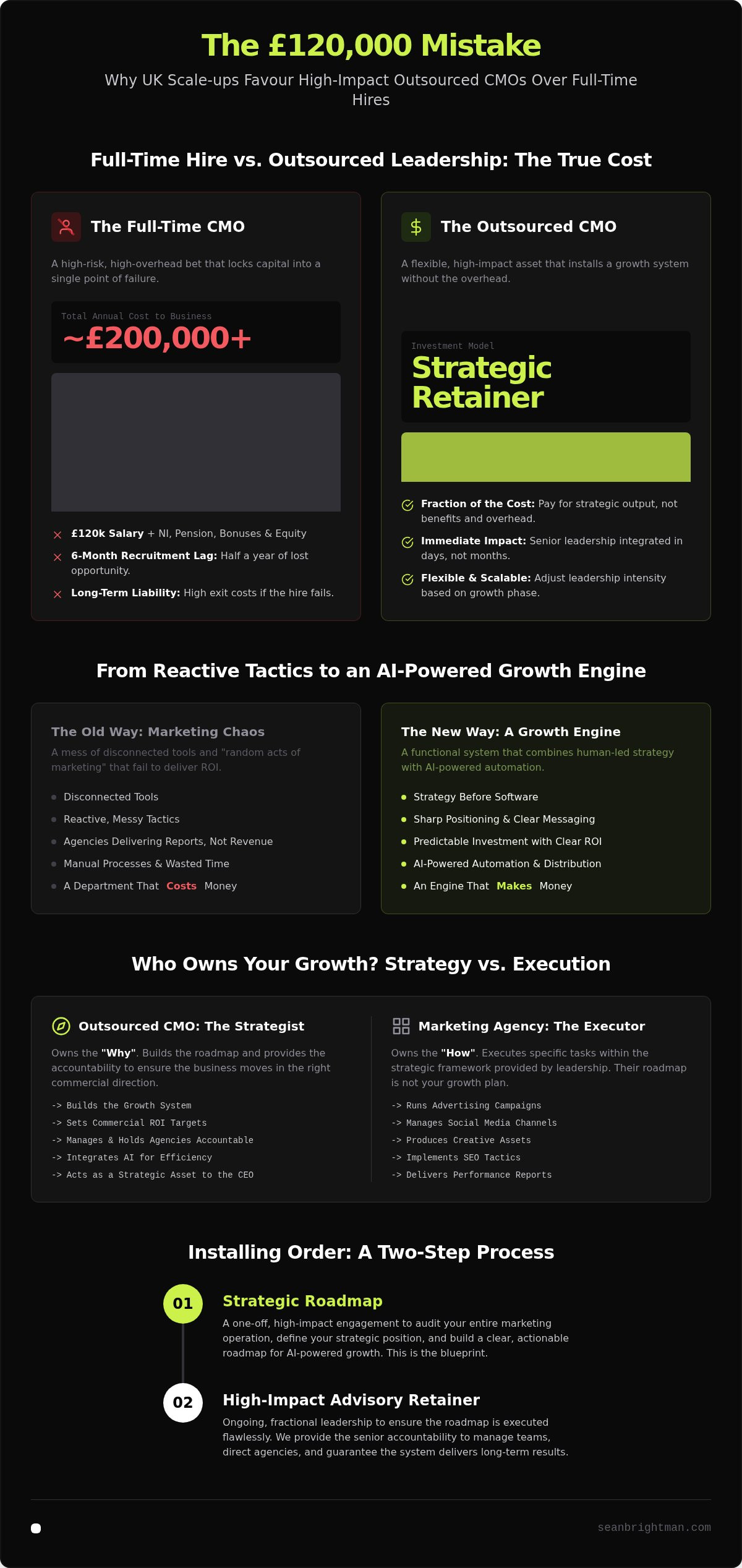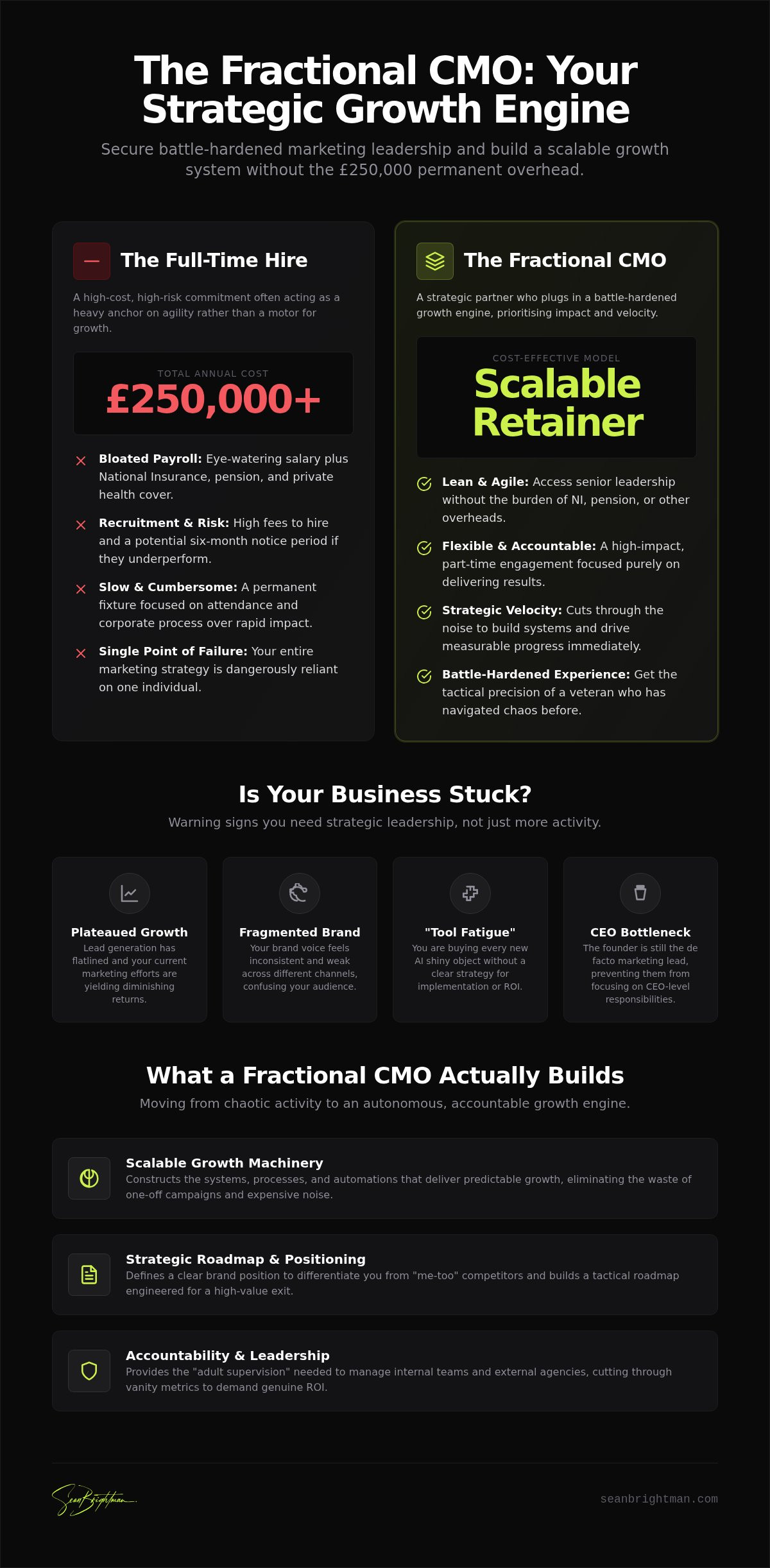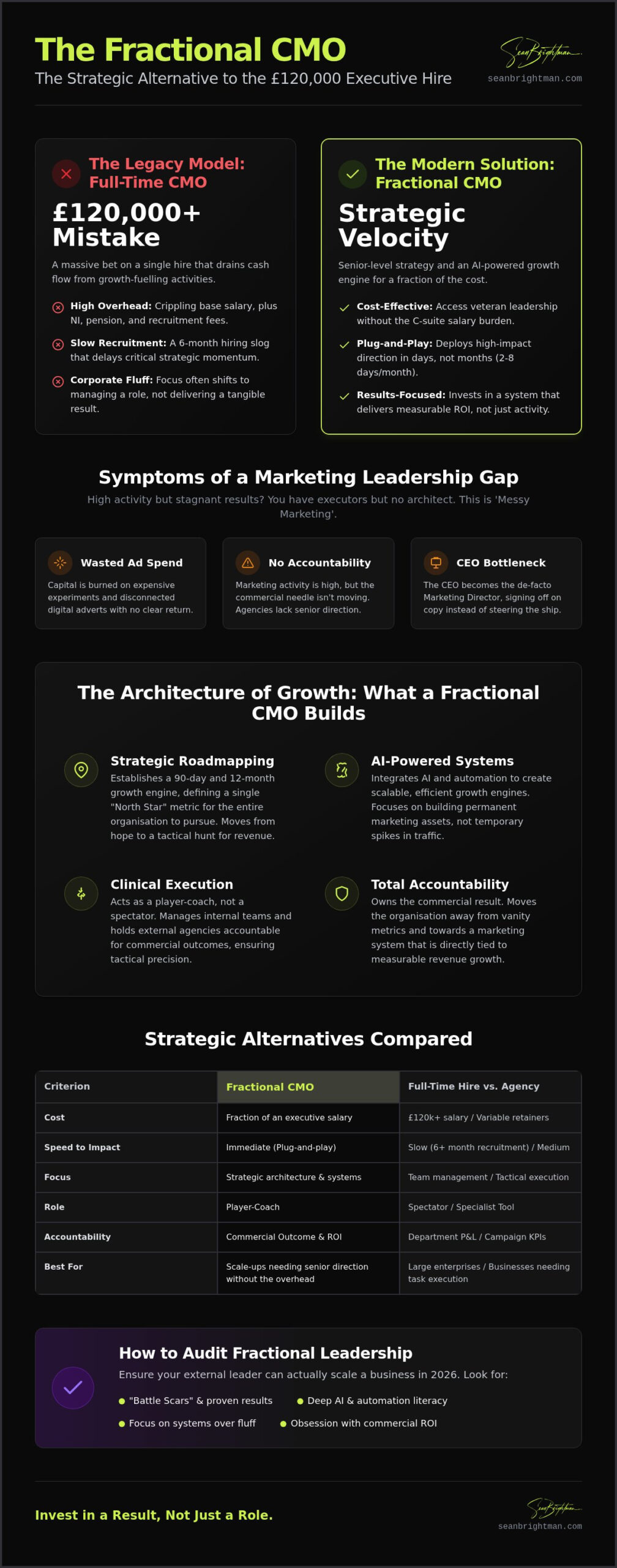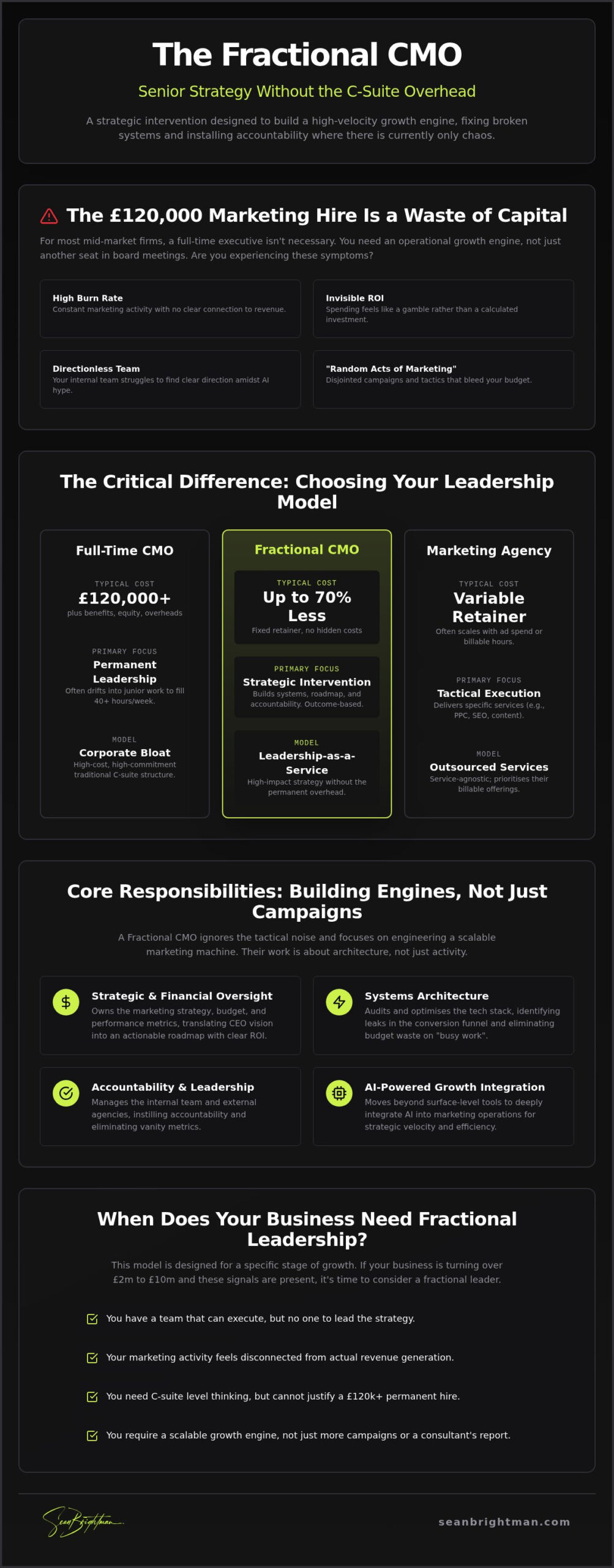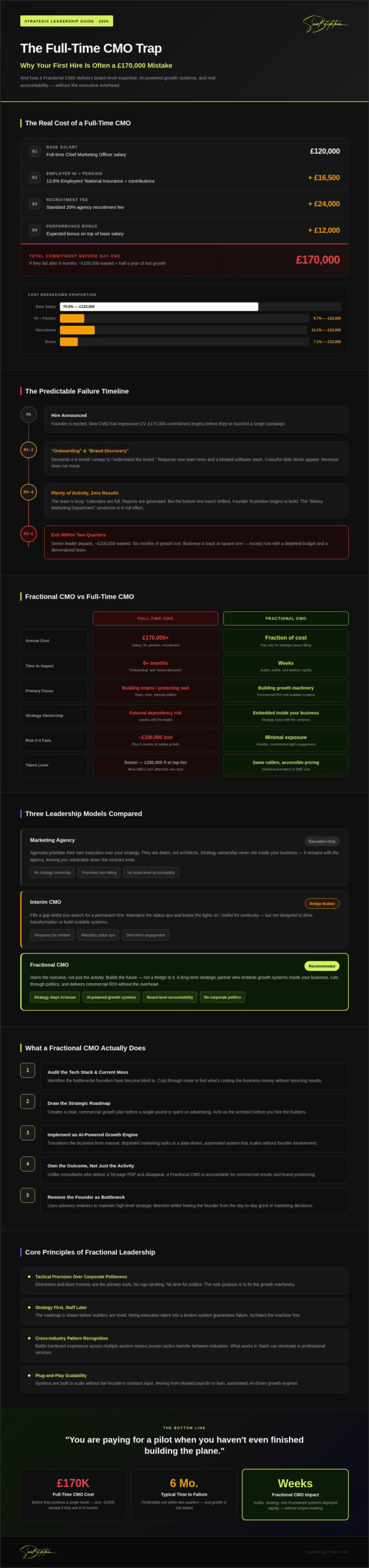
Most marketing consultants are selling you a map to a destination they have no intention of driving you to. They hand over a glossy PDF, collect their fee, and leave your team to struggle with the execution. You’ve likely spent thousands on these “strategic audits” whilst trying to weigh up the merits of a fractional cmo vs marketing consultant, only to find your marketing department still feels like an expensive black box. It’s an exhausting cycle of wasted spend and zero accountability.
You’re right to be frustrated. You don’t need more advice; you need leadership. One role tells you what is broken; the other fixes the machinery and owns the growth engine. This isn’t about semantics. It’s about who is responsible for your bottom line and who is just passing the buck. You deserve a partner who gets their hands dirty rather than one who simply points at the problem from the sidelines.
In this guide, we’ll strip away the corporate fluff to reveal the brutal truth about these roles. You’ll learn how to stop the budget bleed, integrate AI-powered efficiency, and finally install the plug-and-play leadership your organisation demands to scale.
Key Takeaways
- Stop wasting budget on advice you can’t execute by recognising the gap between a consultant’s map and a Fractional CMO’s leadership.
- Master the nuances of fractional cmo vs marketing consultant to determine if your business requires a project-based audit or an embedded P&L owner.
- Audit your internal marketing department to decide if your organisation needs a teacher to provide guidance or a boss to drive accountability.
- Transition from ‘black box’ marketing spend to a transparent growth engine powered by strategic AI roadmapping and high-impact execution.
- Discover how to hold your marketing function accountable for actual business outcomes rather than just vanity metrics and glossy reports.
The Senior Marketing Hire Dilemma: Labels vs Outcomes
Your marketing is a mess. You know it. Your team knows it. You’re likely drowning in tactical noise whilst the strategic needle barely moves. This is the senior marketing hire dilemma. It isn’t just about finding talent. It’s about deciding whether you need an advisor to observe or a leader to own the outcome. Most CEOs fall into the trap of hiring “help” without defining the level of authority required to actually move the needle. They want results but hire for advice. It’s a recipe for expensive, unused strategy documents.
The ‘Messy Marketing’ Symptom
Activity is not impact. Your team might be “busy” posting to socials or tweaking ad copy, but without a strategic brand roadmapping plan, they’re just spinning wheels in the mud. Founders often try to bridge this gap themselves. They become the bottleneck. They burn out. They hire “help” but fail to define the level of authority that help needs to actually fix the system. This is where the debate of fractional cmo vs marketing consultant begins, yet it’s rarely about the title. It’s about the mandate. If your marketing department feels like a black box, you don’t need a spectator. You need someone to open the lid and rewire the circuits.
Why Titles Matter (and Why They Don’t)
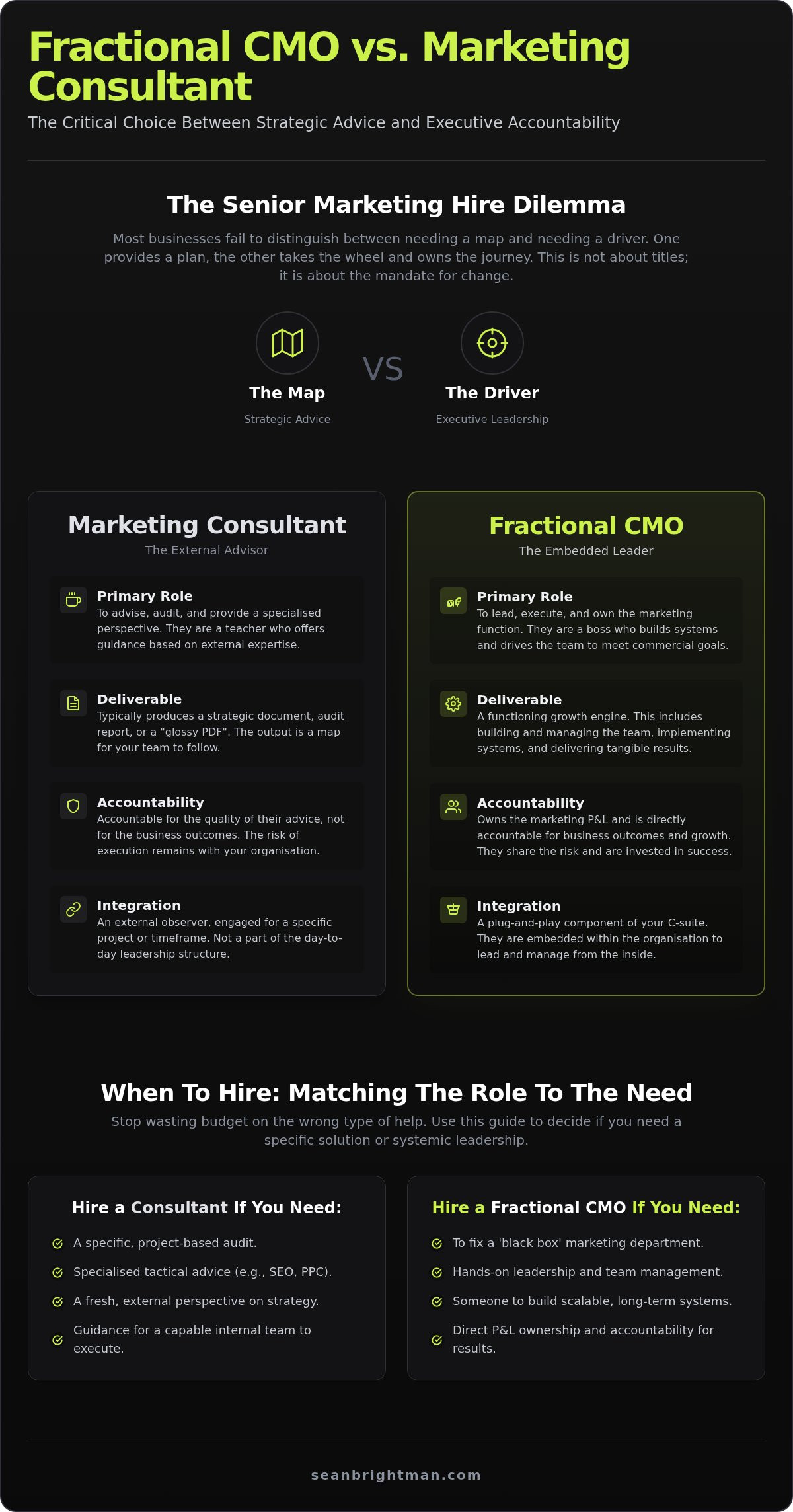
There’s a massive semantic gap between a “consultant” and a “CMO”. Businesses get caught in the confusion because they don’t know what they’re actually buying. A consultant gives you a map. A CMO drives the car. Fractional executives are embedded components of your C-suite; they aren’t external observers. They own the P&L. They manage the team. They take the blame when things go wrong. If you hire a consultant when you need a leader, you’ll end up with a glossy PDF and a team that still doesn’t know what to do on Monday morning. The cost of this indecision is catastrophic in a high-growth environment.
In 2026, the reality is blunt. Your business doesn’t need a tune-up. It needs an engine. You can’t solve systemic dysfunction with a series of one-off projects. You need a functional component that plugs into your organisation and starts producing force immediately. Decide what you want: a teacher to show you the way, or a boss to clear the path. One offers a perspective; the other offers a partnership. Choose the outcome, then find the title that delivers it.
What is a Fractional CMO? Leadership Without the Corporate Fluff
A Fractional CMO isn’t a coach. They aren’t a cheerleader. They are a functional, plug-and-play component of your executive team. The “Fractional” part of the title describes the time commitment, whilst the “CMO” part describes the absolute authority they wield over your marketing function. Unlike a traditional marketing consultant who might offer specialised tactical advice or a specific project audit, a Fractional CMO owns the P&L, the department headcount, and the ultimate strategic results. They are there to lead, not just to look. Understanding the core difference in the fractional cmo vs marketing consultant landscape is about identifying who owns the risk.
This is Senior leadership on demand for businesses that have outgrown founder-led marketing but aren’t ready for the overhead of a full-time executive. When you evaluate the fractional cmo vs marketing consultant debate, you’re choosing between an external observer and an internal driver. One provides a report; the other provides a resolution. It is the difference between hiring someone to tell you the engine is smoking and hiring someone to rebuild the transmission. You need someone who is as invested in the outcome as you are.
The Fractional CMO Mandate
The mandate is simple: build systems that don’t break when the leader leaves the room. A Fractional CMO manages the human element of your marketing machinery. They hire the right talent, remove the underperformers, and mentor the team to peak efficiency. They act as the vital bridge between a CEO’s high-level vision and the messy reality of tactical execution. If your vision is “scale”, the Fractional CMO builds the ladder. They don’t just suggest a better culture; they enforce it through daily accountability and clear performance standards that align with your commercial goals.
Leadership vs Execution
Don’t expect a CMO to write your tweets or fiddle with your Meta ads. That’s a waste of their salary and your time. Their focus is on marketing operations and the underlying architecture of your growth engine. They establish KPIs that actually correlate with bank balances, not just vanity metrics like “reach” or “engagement”. They build the machine; your team or agencies run it. This role is about high-level strategic precision. It’s about ensuring every pound of your budget is working toward a defined commercial outcome.
If you’re tired of guessing which parts of your strategy are working, you might need a Fractional CMO to take the wheel. It’s the difference between buying a list of ingredients and hiring a head chef to run the kitchen. You stop being the bottleneck and start being the CEO again. This is about reclaiming your time whilst ensuring your marketing department finally delivers the scalable growth you’ve been chasing.
The Brutal Difference: Consultants Advise, Fractional CMOs Execute
A consultant delivers a deck. A Fractional CMO delivers a department. This is the fundamental reality of the fractional cmo vs marketing consultant divide. One role is designed to provide perspective from the outside; the other is built to provide power from the inside. When you hire a consultant, you are buying their time and their templates. When you hire a Fractional CMO, you are buying a leader who integrates into your culture, manages your people, and takes absolute responsibility for the commercial outcome.
The core of this distinction is accountability. If a consultant’s strategy fails, they often point to poor internal execution as the culprit. They provided the map; you failed to drive the car. A Fractional CMO doesn’t have that luxury. They are the driver. If the strategy stalls, it’s their neck on the line. They don’t just suggest changes to your team; they reorganise the team, hire the specialists, and fire the agencies that aren’t performing. They are a functional component of your C-suite, not a visiting guest.
The Consultant’s Map
Consultants are best utilised for solving specific, isolated problems. If you need to “fix our SEO” or “audit our brand voice”, a consultant is a surgical tool. They come in, perform the task, and leave. However, this often leads to the “Strategy in a Drawer” syndrome. You receive a brilliant 50 page PDF that no one has the time or expertise to implement. The relationship is transactional. You pay for the deliverable, not the result. It’s a short term fix for a symptom, but it rarely addresses the underlying disease of a broken marketing system.
The Fractional CMO’s Engine
A Fractional CMO is focused on building a scalable growth engine that functions independently of the founder’s daily input. This isn’t a one-off intervention; it is continuous optimisation. They own the vendor and agency relationships, ensuring that every external partner is aligned with your core business objectives. They don’t just give you a list of things to do. They build the machinery to get them done.
This “plug-and-play” mentality ensures that the leadership is active from day one. Whilst a consultant might spend weeks observing, a Fractional CMO starts by fixing. They dive deep into your company culture to understand the friction points that are slowing you down. They aren’t there to be liked; they are there to be effective. By owning the execution, they transform marketing from a cost centre into a predictable revenue driver.
Choosing Your Weapon: When to Hire a Consultant vs a Fractional CMO
Stop looking at titles. Start looking at the internal friction slowing your growth. Choosing between a fractional cmo vs marketing consultant is a clinical decision. It requires an honest audit of your current operations. You aren’t just buying a CV; you’re buying a solution to a specific level of dysfunction. If you pick the wrong tool for the job, you’ll end up with a high bill and the same messy department you started with.
Follow these four steps to decide which path fits your 2026 growth targets:
- Step 1: Audit your internal team. Do they need a teacher or a boss? If your team is capable but rudderless, they need leadership. If they are experts who just need a specific skill gap filled, they need a consultant.
- Step 2: Define the timeframe. Is this a 3-month project or a 12-month transformation? You can’t fix a broken culture or build a growth engine in a single quarter.
- Step 3: Assess your budget. Fractional CMO pricing is an investment in a leadership asset that builds equity in your system. Consultant day rates are an expense for a specific deliverable.
- Step 4: Determine AI readiness. A consultant might suggest tools. A Fractional CMO integrates an AI-powered growth engine into your daily workflow to drive scalable efficiency.
Hire a Consultant When…
Consultants are surgical tools. Use them when you have a high-performing team that simply needs a fresh perspective to break through a plateau. They are perfect for clearing a single, well-defined technical hurdle, such as a CRM migration or a specific SEO audit. If you already have a solid strategy and just need a “second opinion” to validate your direction, a consultant provides the necessary distance without the cost of long-term integration. It’s a transactional relationship built for speed and specific outcomes.
Hire a Fractional CMO When…
Marketing feels like a chaotic black box. If you can’t see a clear ROI on your spend, you don’t need an audit; you need an owner. This is for the CEO who is wasting more than five hours a week managing marketing tasks instead of leading the company. If you’re preparing the business for an exit or a major scale-up, you need a functional leader who can professionalise the department. A Fractional CMO builds the machinery that works when you aren’t in the room.
If you’re tired of being the bottleneck and want to install a system that actually scales, it’s time to hire a leader who owns the outcome. You stop guessing. You start growing. This is about moving from a collection of random acts of marketing to a predictable revenue-generating machine.
Beyond the Title: Building a Growth Engine with Sean Brightman
Traditional business consulting is obsolete. In 2026, advice is a commodity; AI can generate a strategy in seconds. The real value lies in the mechanical integration of that strategy into a living, breathing growth engine. This is why the choice between a fractional cmo vs marketing consultant must focus on who can actually build the system. Sean Brightman doesn’t just offer perspective. He installs a functional leadership component designed for strategic velocity.
Our AI Consulting approach moves beyond tool fatigue. We don’t just buy software; we build scalable marketing machinery. This is about moving from “playing with ChatGPT” to a department that uses AI to automate the mundane and amplify the strategic. It is a fundamental shift from manual labour to mechanical precision. When evaluating the fractional cmo vs marketing consultant landscape, the only metric that matters is the speed of implementation.
Strategic Brand Roadmapping
Positioning is useless if it stays on a whiteboard. Our Roadmapping process is a 90 day sprint to strategic clarity. We strip away the corporate jargon to create a “no-fluff” execution plan that your entire team can follow without supervision. It identifies the bottlenecks, defines the KPIs, and sets the rhythm for your growth. The Strategic Brand Roadmap is the functional bridge between your high-level vision and your bottom-line profit.
AI-Powered Marketing Systems
Efficiency is the only competitive advantage left. We implement practical AI solutions that actually improve your output whilst reducing your overhead. This isn’t about hype. It’s about architecture. We build the systems that allow your team to produce ten times the results with half the effort. This is how you transform a stagnant department into a high-impact growth engine.
For ambitious CEOs who need ongoing direction without the executive bloat, the Advisory Retainer provides the necessary accountability. It ensures your marketing engine stays on track and continues to evolve with the market. You get senior-level expertise on tap, ensuring your growth remains predictable and your strategy remains sharp. You stop being the bottleneck and start being the architect of your scale.
If you’re ready to stop wasting budget on advice you can’t execute, it’s time to act. Book a strategic roadmapping session today and start building a marketing department that actually owns your growth.
Stop Renting Strategy; Start Owning Outcomes
You’ve reached the point where advice is no longer enough. The fundamental choice between a fractional cmo vs marketing consultant boils down to one word: accountability. Consultants provide the map whilst you struggle to find the fuel. Fractional CMOs rebuild the engine and take the wheel. It is the difference between an external observer and an internal driver who owns your strategic results.
Stop settling for strategy documents that gather dust. You need a functional leader who integrates AI-powered efficiency and manages the messy reality of tactical execution. It’s time to move from a black box of marketing spend to a transparent system that drives profit. You deserve a growth engine that functions with mechanical precision and clinical focus.
As an ex-agency founder and author of the definitive guide to brand and AI strategy, Sean Brightman specialises in high-impact advisory retainers that deliver strategic velocity. Stop guessing and start growing: Book your Strategic Roadmap session with Sean Brightman. Your business is ready for the next gear; you just need to install the right component to reach it.
Frequently Asked Questions
Is a Fractional CMO more expensive than a marketing consultant?
A Fractional CMO involves a higher monthly commitment but often represents better value by replacing the need for a full-time executive salary. Whilst a marketing consultant might charge a lower project fee for a specific audit, the Fractional CMO owns the entire P&L and growth engine. You’re paying for a functional leadership component that drives revenue rather than a one-off report that requires your time to implement. It is an investment in long-term equity.
How many days a week does a Fractional CMO typically work?
Most Fractional CMOs dedicate one to two days per week to your business, though this varies based on your specific roadmapping requirements. The focus is on high-impact strategic velocity rather than clocking hours. They are available for critical decision-making and team leadership without the bloat of a full-time presence. It’s about concentrated expertise that unblocks your marketing department so the rest of the team can execute with precision and speed.
Can a Fractional CMO manage my existing marketing agency?
Yes, managing external vendors and agencies is a core part of the Fractional CMO mandate. They act as your internal authority, ensuring that every agency partner is held accountable for commercial outcomes rather than vanity metrics. They bridge the gap between your vision and the agency’s tactical execution. This removes the management burden from the CEO whilst ensuring your external spend is actually contributing to a scalable and efficient growth engine.
What is the typical length of a Fractional CMO engagement?
Engagements typically last between six and eighteen months, depending on the complexity of your marketing systems. Building a high-impact growth engine isn’t an overnight task; it requires time to audit, reorganise, and optimise your internal machinery. Whilst a consultant might finish a project in weeks, a Fractional CMO stays until the department is professionalised and capable of running effectively without their daily intervention. They build the machine then ensure it runs smoothly.
Do I need a Fractional CMO if I already have a Marketing Manager?
Most businesses with a Marketing Manager benefit significantly from a Fractional CMO’s senior-level leadership. A Manager handles the “how” of daily tasks, but the CMO defines the “why” and the overarching brand roadmapping. The Fractional CMO mentors your existing team, providing the strategic oversight and accountability that a mid-level manager often lacks. It turns a tactical execution team into a result-oriented department that understands its direct impact on your bottom line.
How does AI consulting differ from traditional marketing strategy?
AI consulting focuses on building automated, scalable systems rather than just providing abstract advice. Traditional strategy tells you what to say; AI-powered strategy builds the machinery to say it more efficiently. We move beyond playing with basic tools to installing a functional growth engine that uses AI to reduce manual labour and increase output. It’s about mechanical integration that makes your marketing department ten times more effective without the need to increase headcount.
What should I look for in a Fractional CMO’s track record?
Look for a battle-hardened professional who has actually run departments and founded businesses. You need someone who has seen the chaos before and knows the exact sequence of repairs required. Check for evidence of strategic brand roadmapping and a clear methodology for implementing AI systems. A published book or a history of high-impact advisory retainers proves they have a repeatable system for driving growth rather than just a collection of random tactics.
Can a Fractional CMO help prepare my business for an exit?
Absolutely. A Fractional CMO professionalises your marketing function, making it a predictable, scalable asset that increases company valuation. They document processes, build sustainable growth engines, and remove the founder as the primary bottleneck. When you weigh up a fractional cmo vs marketing consultant for an exit, the CMO wins because they create a department that functions independently. This level of operational maturity is exactly what savvy buyers look for during due diligence.