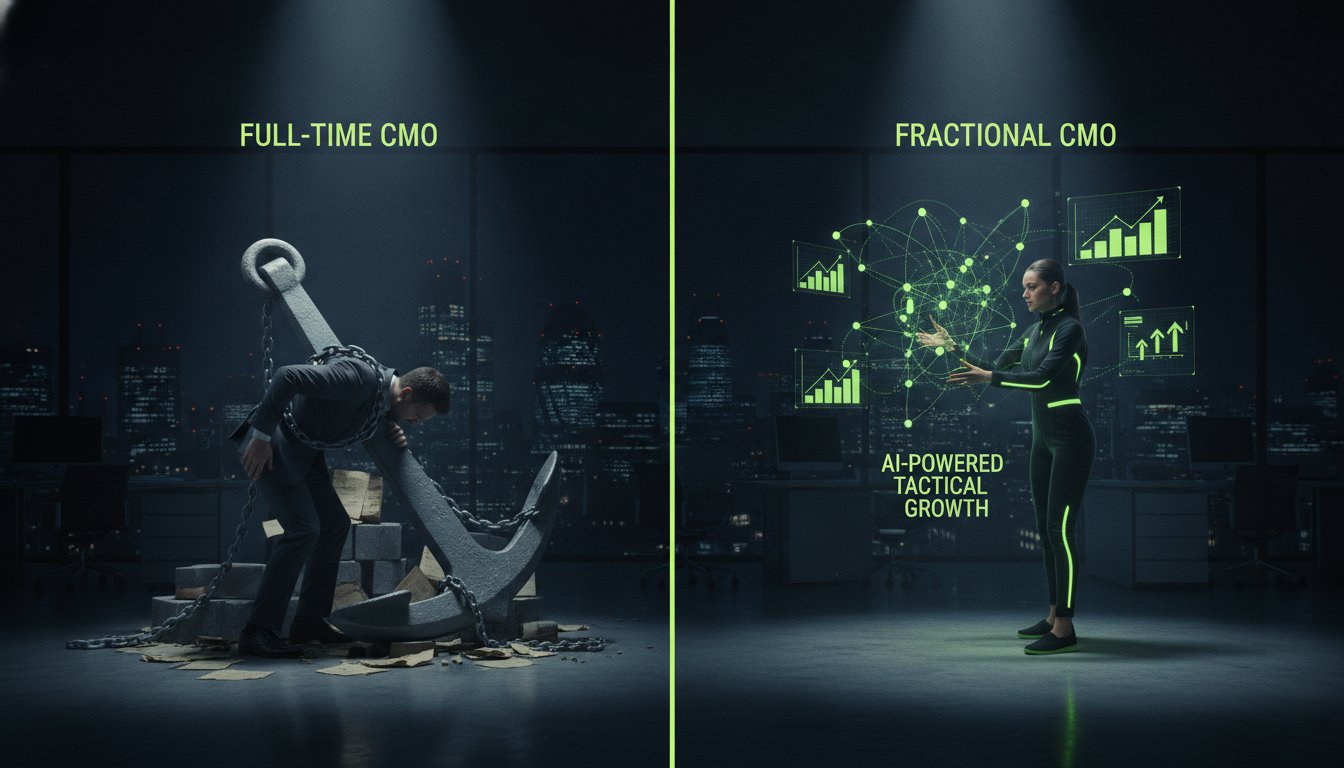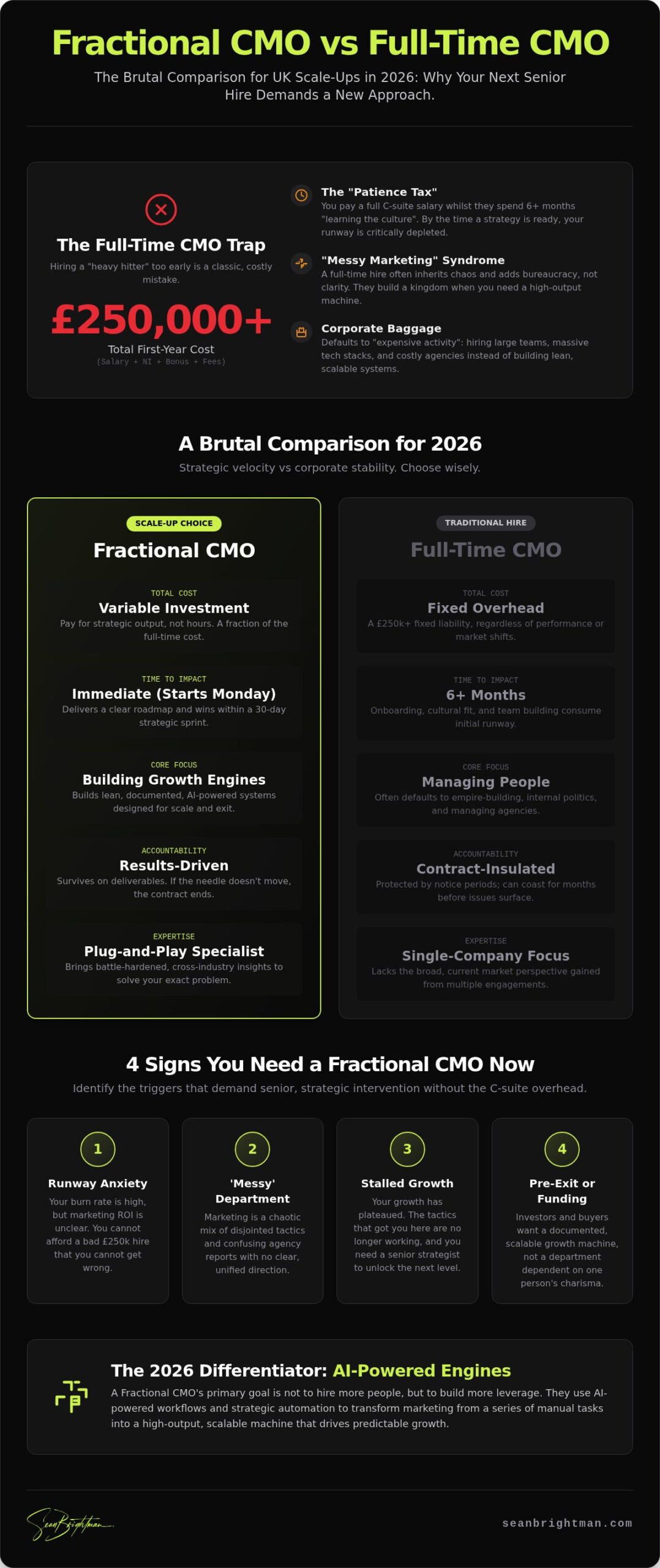
A full-time CMO can be the wrong hire, even when your business badly needs better marketing. The risks of hiring a full-time CMO too early begin when you commit to executive capacity before there is enough strategic work, a clear mandate or a system ready to support it.
It is tempting to bring in a senior leader to “sort out growth”. But if priorities keep shifting, marketing foundations are patchy or the team lacks capacity to execute, a CMO can add cost and complexity without fixing the real problem. That does not mean you should go without leadership. It means identifying the gap before choosing the role.
This article explains the practical signs a full-time appointment may be premature and how to tell a genuine leadership gap from missing strategy, systems or execution capacity. You will also see how a roadmap can clarify the work ahead, and how fractional CMO leadership or ongoing advisory support can provide senior direction while your business works out what it needs next.
Key Takeaways
- The risks of hiring a full-time CMO too early often begin with a mismatch between the role’s senior capacity and the work your business can use.
- Identify whether unclear ownership, weak marketing foundations or limited execution capacity is creating the problem before defining a new executive role.
- Compare full-time leadership, fractional support, a focused roadmap and internal execution by the business need each option must solve.
- Agree on marketing outcomes, decision-making authority and the CMO’s scope before making a permanent appointment.
- Build direction, ownership and systems first, then review whether the need for sustained senior leadership is clear.
Why hiring a full-time CMO too early can create more drag than growth
An early hire is not simply a CMO joining a small business. It is a mismatch: the company commits to executive capacity that its marketing needs, authority and systems cannot put to work. The title may look like progress, but seniority alone will not make the business ready to use it.
The pressure to professionalise marketing is real. A founder cannot keep making every decision, and inconsistent activity can leave the business without a clear direction. But a full-time executive is not the automatic answer. First identify what needs leadership, what needs doing and whether the business can act on the decisions that leadership makes.
The risks of hiring a full-time CMO too early increase when a new leader is held accountable for outcomes they cannot control. If the board changes priorities, sales and marketing disagree on the target customer, or nobody has authority to approve a plan, the CMO cannot simply remove those barriers. The result can be more meetings and frustration, not faster progress.
Executive seniority cannot compensate for missing direction, ownership or operating foundations. It can expose those gaps and help address them, but only when the business gives the leader the authority and support to do so.
What a full-time CMO is hired to own
A CMO’s remit is strategic: set marketing direction, sharpen positioning, guide investment choices and connect marketing priorities to commercial goals. The Chief Marketing Officer (CMO) role varies between organisations, so define what the executive will own rather than relying on the title to do the work.
That is different from personally delivering every channel activity. A CMO may decide which audiences to prioritise and how marketing supports revenue, while specialists or an internal team carry out the day-to-day work. For the role to function, the CMO needs access to decision-makers, clear authority over relevant choices and outcomes that leaders have agreed to measure.
The early-hire mismatch: senior responsibility without usable leverage
Picture a business still debating whether to serve one customer group or another. Its new CMO is asked to set positioning, plan investment and deliver growth, yet each decision is reopened by the founders. The remit shifts before the work gains traction. The problem may not be the executive’s judgement; it may be the lack of stable priorities and decision rights.
A lean team can create another mismatch. If nobody else can plan campaigns, manage suppliers or turn decisions into consistent activity, the CMO may spend the week filling execution gaps instead of leading. That may be necessary in the short term, but it leaves little room for strategic work. Visible seniority is not the same as usable leverage.
Before treating a senior hire as the fix, map the work that needs ownership, the decisions the role can make and the people or systems needed to carry those decisions through. If those pieces are missing, clarify the operating conditions first. Then define the leadership role around real business needs, not the reassurance of a senior title.
The hidden risks of hiring a CMO before your marketing is ready
A senior appointment can make marketing look more organised before the work underneath it is organised. That gap creates practical risks: unclear ownership, underused leadership capacity, fragile systems, extra overhead and decisions that take longer to reach the people doing the work.
This does not mean every early CMO hire fails. The risk is hiring into conditions that prevent the role from working. Marketing activity may increase, with more campaigns, meetings and reporting, while accountability for commercial outcomes stays blurry. If nobody has agreed which results matter, activity can look busy without showing whether it supports the business.
A premature executive hire can magnify unclear priorities rather than resolve them. A new leader can bring structure, but cannot make conflicting expectations disappear simply by taking the title.
Role ambiguity, duplicated decisions and stalled execution
Consider a founder who wants the CMO to own growth but still approves every audience, message and budget decision. The CMO carries the target without having the authority to shape the choices behind it. Work queues up for sign-off, teams second-guess priorities and responsibility becomes a tug of war.
Overlap adds friction. An internal marketer, an agency and a consultant may each own part of the work, while the CMO is expected to direct the whole system. Without clear boundaries, people duplicate planning or wait for someone else to decide. Adding another approval layer does not improve governance if nobody knows who has the final call.
Before expanding the role, write down who decides, who delivers and who is accountable for each major marketing outcome. For example, name the owner of positioning decisions, budget approval and campaign delivery. The aim is not more process. It is fewer decisions stuck between people.
A senior hire cannot replace missing systems or capacity
Leadership and operating capacity are different problems. A CMO can set direction, but a plan may still stall if customer data is unreliable, reporting is inconsistent, processes are unclear or the team has no time to implement it. Those are system and delivery gaps, not proof that the company needs a more senior title.
Look at where work breaks down. If leads are not tracked consistently, improve the measurement process before expecting confident investment decisions. If nobody owns follow-up, assigning a strategy will not create the time or accountability to do it. If the team lacks a specialist skill, clarify how that work will be delivered rather than assuming the CMO will personally cover every gap.
Marketing operations connect priorities, processes, tools and ownership so work can move. A roadmap can expose missing pieces, while fractional CMO leadership can provide senior direction as the business determines what ongoing support it needs. If the bottleneck is unclear systems rather than executive capacity, focus there first. Learn more about marketing leadership and roadmapping.
Full-time CMO or another step? Compare the real need before committing
Choose the support that addresses the bottleneck, not the title that sounds most senior. A company wrestling with its direction needs something different from one with a clear plan but nobody to deliver the work.
A leadership-capacity gap is a shortage of strategic judgement, prioritisation and accountability; a marketing-execution gap is a shortage of people, skills or time to complete defined work. Confusing the two can deepen the risks of hiring a full-time CMO too early: the business adds leadership when it needs delivery, or assigns tasks to a strategist and expects them to function as an entire team.
| Option | Best fit | What it does not replace |
|---|---|---|
| Full-time CMO | Sustained executive leadership, with an ongoing remit, authority and sufficient work to own. | The team, systems and specialist capacity needed to put decisions into action. |
| Fractional CMO | Senior direction and accountability when the business needs leadership but is not ready to define a permanent role. | Internal ownership of delivery; the team still needs to carry out agreed work. |
| Focused roadmap | Unclear priorities, positioning or next steps that need to be turned into a structured direction. | Ongoing leadership or hands-on execution after the plan is set. |
| Internal execution | Specific, agreed marketing tasks that need an owner with the right skills and time. | Senior strategic direction when the business has not decided what work matters most. |
When the business needs strategy, structure or delivery
Match the response to the problem. If leaders cannot agree on target customers, positioning or priorities, start with a roadmap that makes the choices visible. If the direction is clear but senior decisions keep returning to the founder, the gap may be ongoing leadership and accountability. If the plan is agreed and a defined task is stalled, assign execution to an appropriate internal resource or specialist. These options solve different problems. They are not interchangeable.
What a staged leadership model can protect
Staged support lets the business make decisions before locking a permanent job description around assumptions. A roadmap can clarify priorities first. Fractional CMO leadership can then provide senior direction while the company observes the actual cadence of decisions, the boundaries of the remit and the internal ownership needed. Ongoing advisory support can maintain strategic oversight without replacing the people responsible for delivery.
That sequence gives leaders useful evidence: which decisions repeatedly need executive attention, where authority should sit and whether the demand for senior leadership is sustained. A fractional CMO model offers a way to take that staged approach. Sean Brightman’s marketing leadership support includes fractional CMO services, roadmapping and ongoing advisory support.
How to tell whether your business is ready for a full-time CMO
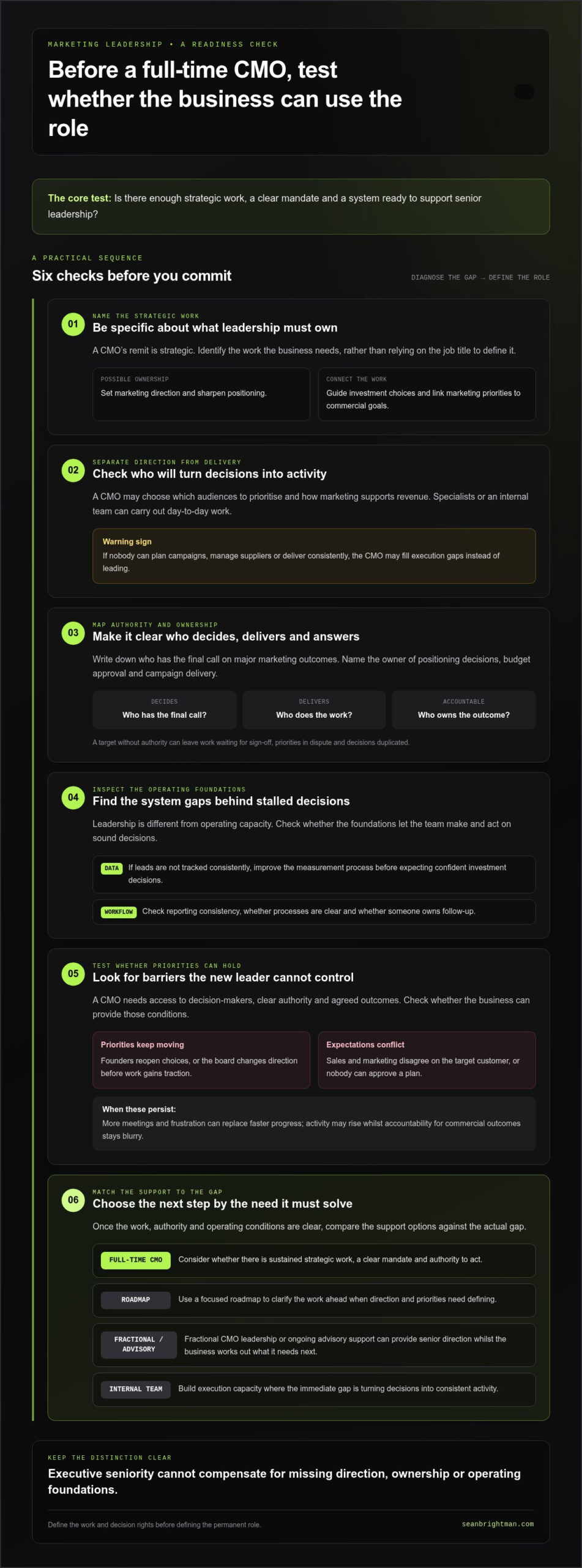
Readiness is not a revenue milestone or a prestigious title. It is whether the business has a sustained need for senior marketing leadership, a clear mandate for the role and the capacity to act on its decisions. Use this diagnostic before defining the position. If leaders cannot answer the questions consistently, the risks of hiring a full-time CMO too early remain.
Five questions to answer before opening the role
- What business priority needs executive-level marketing ownership? Name the commercial problem, such as unclear positioning or a disconnected marketing direction. “We need more growth” is a concern, not a defined remit.
- Which marketing outcomes matter? Agree what meaningful progress looks like and how leaders will review it. Outcomes should connect to business priorities, not just a list of campaigns or activity.
- What decisions can the CMO make? Set out where the role has authority, including which choices the CEO retains. If founders expect the CMO to own results but reserve every meaningful decision, the role lacks the mandate it needs.
- Can the organisation put the strategy into action? Identify who owns delivery, whether the team has the skills and time required, and who controls the resources assigned to marketing. A strategy without internal ownership cannot move from plan to practice.
- What is the actual scope of the role? Define the recurring responsibilities, decision-making rhythm and boundaries between executive leadership and execution. Only then can you judge whether the demand calls for a permanent full-time position.
The answers should form a coherent picture. If the business can state its priorities, leaders agree on outcomes and authority, and internal owners can carry the work forward, there may be a durable executive remit to define. If not, the gap may be clarity or capacity rather than a permanent leadership requirement.
Signals that the timing or role definition needs work
Watch for priorities changing before work gains traction, success measures that mean different things to different leaders, or unresolved questions about who the business serves and how it should be positioned. These are warning signs. They do not prove a full-time CMO will never be right; they suggest the company should settle the brief before building a permanent role around it.
Ask whether the need is temporary or recurring. If leadership mainly needs to choose a direction, a focused roadmap can turn competing ideas into clear priorities. If senior marketing decisions and accountability remain a regular business need, that points to an ongoing leadership gap. Keep the distinction practical: what work repeats, who needs to decide and what can the organisation support?
Strategic brand roadmapping can clarify direction before expanding the role. Explore strategic roadmapping with Sean Brightman to map the leadership need against your priorities.
Build the right marketing leadership path before making a permanent hire
A readiness check only matters if it changes what you do next. Turn the findings into a working sequence: clarify direction, assign ownership, build the systems needed to act, then review what leadership gap remains. This gives the business a way forward without treating a senior title as a shortcut for unresolved decisions.
Put strategy and accountability in place first
Start with commercial priorities and positioning. Decide what marketing needs to achieve and which audiences or opportunities matter most. Then give internal owners clear responsibility for carrying decisions into action. Strategic direction without an owner becomes a document on a shelf.
Build a basic operating rhythm around that work. Agree how progress will be reviewed, where decisions get made and how obstacles get raised. An advisory rhythm can help leaders assess progress, unblock decisions and adjust priorities as the business learns. Fractional CMO support provides senior strategic direction and accountability while internal people remain responsible for delivery. It is strategic advisory support, not recruitment or outsourced advertising.
Keep the sequence practical:
- Clarify direction: agree commercial priorities and positioning.
- Assign ownership: name who will carry each decision into action.
- Build systems: establish the processes and reporting the work needs.
- Review the gap: identify which decisions or responsibilities still need consistent senior ownership.
This staged approach helps reduce the risks of hiring a full-time CMO too early because you are testing the work the role would actually need to own, rather than designing it around pressure to appear established.
Know what would justify a full-time CMO later
A permanent appointment becomes easier to define when the business can point to a sustained leadership workload, not just a temporary burst of uncertainty. Look for recurring strategic decisions that need consistent internal ownership, a remit that leaders understand and a clear connection between marketing priorities and business goals.
Then check whether the organisation can support the role in practice. Will the CMO have authority to make the decisions attached to the remit? Are team relationships and responsibilities clear? Can the business maintain a useful decision-making cadence and give the role enough internal capacity to turn direction into action?
If those conditions are not in place, do not force the job description. A focused roadmap can clarify direction before you reshape the organisation. If strategic brand direction is still unsettled, strategic brand roadmapping can help make the next priorities clearer.
The permanent role should follow evidence of a durable organisational need, not the belief that another executive will create clarity by arriving. Build the foundations, observe where leadership is repeatedly required, then define the role around that evidence. Discuss a sensible marketing leadership path for your business.
Choose the next step that fits your business
The right marketing leadership path is not a verdict on how ambitious your business is. It is a decision about what it needs now, and what evidence would justify changing that arrangement later. Build the role around real demand, not pressure to look more established.
If you are still testing priorities, a roadmap can bring direction into focus. If senior decisions need regular oversight, fractional CMO support can provide part-time strategic leadership, with advisory support to keep accountability moving. The point is not to avoid a permanent hire at all costs. It is to make one when the organisation can use the role well. That is how you reduce the risks of hiring a full-time CMO too early without putting growth on hold.
Start with the business problem, then choose the level of support that fits. Build a smarter marketing leadership path with Sean Brightman.
Frequently Asked Questions
Is there a revenue threshold for hiring a full-time CMO?
No, revenue alone cannot tell you whether a full-time CMO is the right appointment. Two businesses with similar turnover may face very different marketing demands: one may need to coordinate several established teams, while another is still testing which customer group responds. Look at the decisions piling up, how often they need senior attention and whether the business can support the remit. Treat revenue as context, not a hiring trigger.
Can a business have a CMO without hiring one full-time?
Yes. A fractional CMO gives a business access to senior marketing leadership on a part-time basis. This can suit a company whose founder needs help setting priorities or making strategic decisions but does not yet have a full-time leadership workload. The arrangement provides direction, not an automatic replacement for internal staff. Employees still need to own customer follow-up, content production or other agreed delivery work.
What happens if a company hires a CMO before defining the role?
The CMO may be judged against expectations that were never agreed. One founder might expect stronger brand recognition, while another expects immediate sales growth, leaving the executive to reconcile conflicting measures of success. Prevent that by writing a short role brief before hiring: state the business problem, the outcomes to review, decisions the role controls and responsibilities that stay elsewhere. This gives everyone a shared reference point when priorities compete.
Should a startup hire a CMO before building a marketing team?
Not automatically. First separate leadership from specialist work. A startup might need senior help deciding which audience to focus on, while its immediate delivery gap is a person who can manage the website or customer communications. A CMO can set direction, but one executive should not be assumed to provide every skill the business needs. List the work, identify the skills required and decide which responsibilities need leadership and which need hands-on delivery.
How can a founder tell whether marketing needs strategy or execution?
Check what happens when the team sits down to plan. If people disagree about who the offer is for or which message to lead with, the blockage is strategic. If they agree on the audience and message but miss deadlines because no one owns the work, the issue is execution. Write down the stalled decision or task, its owner and what is stopping progress. That simple check can prevent buying leadership to solve a delivery problem.
When is a full-time CMO more appropriate than fractional leadership?
A full-time role may fit when senior marketing decisions are a regular, day-to-day responsibility and the organisation needs one executive consistently embedded in its leadership and team rhythms. For example, if several departments rely on ongoing coordination and marketing choices require frequent internal trade-offs, assess whether part-time oversight can meet that demand. The deciding factor is the sustained shape of the work, not a standard company size or funding milestone.
Does hiring a full-time CMO guarantee better marketing results?
No. A CMO can improve leadership, but the appointment alone cannot guarantee commercial results. The risks of hiring a full-time CMO too early include adding complexity without resolving the constraint holding marketing back. Track whether decisions lead to owned work and whether the measures chosen reflect business priorities. If activity rises but the business learns little about what is working, review the strategy and measurement before assuming a more senior appointment will change the outcome.